 listicle
Dental implant failure: common reasons and prevention
Table of Contents
- Why dental implants fail: the main causes
- Peri-implantitis symptoms and what they mean
- Impact of smoking on dental implants
- Bone loss and implant stability
- How to clean around dental implant crown properly
- Poor initial placement and bite problems
- Protecting your implant investment long-term
- Frequently Asked Questions
Last Updated: September 23, 2026
Why dental implants fail: the main causes
Dental implant failure doesn't happen by accident. It's the result of specific, preventable factors that compromise the bond between the implant and your jawbone. Understanding these causes is the first step toward protecting your investment.
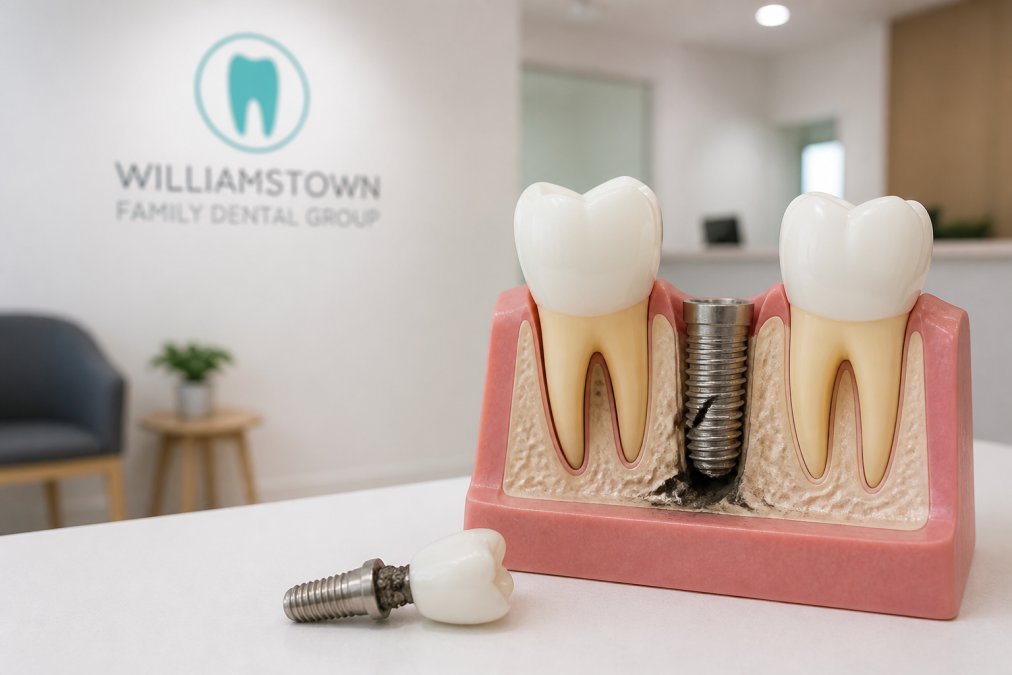
The most common reason for dental implant failure is peri-implantitis, an infection that develops around the implant site. This occurs when bacteria accumulate in the space between the implant and gum tissue, causing inflammation and bone loss. Without intervention, the infection spreads and eventually destabilises the implant.
Other major contributors include poor initial placement, smoking, inadequate bone density, and bite problems that place excessive force on the implant. Each of these factors can act independently or combine to undermine implant success. The good news is that most are manageable with proper planning, maintenance, and professional oversight.
At Williamstown Family Dental Group, we focus on preventing implant failure before it starts. Our approach includes detailed aftercare guidance tailored to your specific situation.
Peri-implantitis symptoms and what they mean
Peri-implantitis is an infection of the tissues surrounding your implant. It's the leading cause of implant failure, and early detection makes all the difference.
Symptoms often develop gradually. You might notice bleeding or swelling around the implant crown, discomfort when chewing, or persistent bad breath that doesn't improve with cleaning. Some people experience a dull ache in the jaw or notice the gum receding slightly around the implant site.
The critical distinction is timing. Peri-implantitis typically appears months or even years after implant placement, not immediately. This is why routine check-ups matter so much. Your dentist can spot the early signs, slight bone loss on X-rays, pocket depth changes, or subtle inflammation, before you feel any pain.
If you notice any of these warning signs, don't delay seeking professional assessment. The infection can progress rapidly once it takes hold, and early treatment is far simpler than managing advanced bone loss. A professional cleaning and targeted antimicrobial treatment often resolve mild cases, but advanced peri-implantitis may require additional intervention.
Impact of smoking on dental implants
Smoking dramatically increases the risk of implant failure. The research consistently shows that smokers face significantly higher complication rates than non-smokers.
Tobacco smoke impairs blood flow to the gums and bone, slowing the healing process after implant placement. This directly interferes with osseointegration, the critical phase when bone cells bond to the implant surface. When healing is compromised, that bond never becomes as strong, leaving the implant vulnerable.
Smoking also suppresses immune function in the mouth, making it harder for your body to fight off bacterial infection. This combination, slower healing plus reduced infection resistance, creates the perfect environment for peri-implantitis to develop.
The timeline matters. Ideally, you should stop smoking at least two weeks before implant placement and avoid it for at least eight weeks afterwards. Many professionals recommend quitting for a full year to maximise healing. If you're a current smoker considering implants, discuss this directly with your dentist. Some practices may recommend alternative treatments or require a documented quit attempt before proceeding.
Bone loss and implant stability
Your jawbone is the foundation for any implant. Without sufficient bone density and volume, even a perfectly placed implant will fail.
Bone loss happens naturally after tooth extraction, as the body resorbs bone that's no longer needed to support a tooth root. The longer you wait after losing a tooth, the more bone you lose. This is why early implant placement (ideally within a few months of extraction) gives you better odds of success.
Some people have naturally lower bone density due to age, hormonal changes, or medical conditions. Others develop bone loss over time from gum disease or poorly fitting dentures. Before implant placement, your dentist assesses bone volume using imaging. If levels are too low, bone grafting may be necessary to create a stable foundation.
Even after successful placement, ongoing bone loss can occur if the implant isn't properly maintained. Peri-implantitis is the primary cause of post-placement bone loss. Regular professional cleaning and meticulous home care prevent the infection that triggers this deterioration.
The message is straightforward: bone loss is progressive but manageable. Early intervention, whether that's prompt implant placement after tooth loss or bone grafting before implant insertion, gives you the best chance of long-term stability.
How to clean around dental implant crown properly
Cleaning around your implant crown requires a different approach than cleaning natural teeth. The tissue around an implant is more delicate, and the margin where the crown meets the gum is a prime site for infection.
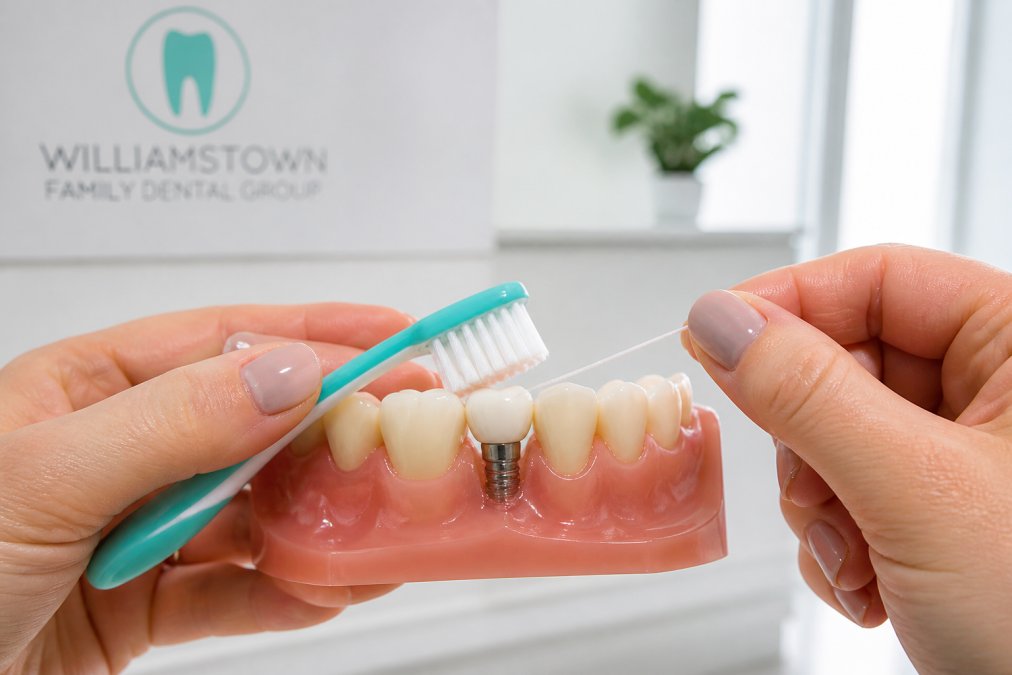
Start with a soft-bristled toothbrush and gentle, circular motions. Avoid the aggressive scrubbing motion you might use on natural teeth. Angle the brush at 45 degrees toward the gum line, and spend extra time where the crown meets the tissue. This is where plaque and bacteria accumulate most readily.
Flossing around implants demands care. Traditional floss can be difficult to manoeuvre, so consider using implant-specific floss or a water flosser. These tools clean between the implant and adjacent teeth without putting pressure on the gum tissue. Gently guide the floss or stream of water along the entire perimeter of the crown, including the back surface.
Your dentist may recommend antimicrobial rinses or specialised cleaning aids, particularly during the first year after placement. These products help control bacterial growth in the healing phase. Use them exactly as directed, more isn't better, and overuse can disrupt the healthy bacterial balance in your mouth.
Professional cleaning every three to four months is standard aftercare for implants. This removes buildup that home care alone can't address and allows your dentist to monitor the implant's health. Williamstown Family Dental Group provides professional cleaning as part of our preventive approach, ensuring your implant stays in optimal condition long-term.
Poor initial placement and bite problems
The position of your implant determines how forces distribute through your jaw. Even a slight misalignment can create excessive pressure on specific points, leading to bone loss and eventual failure.
Poor placement typically results from inadequate planning or imaging before surgery. A dentist who doesn't carefully map the implant position relative to your bone structure, adjacent teeth, and bite pattern risks creating problems that emerge months later. This is why 3D imaging and detailed pre-operative assessment are non-negotiable.
Bite problems develop when the implant crown is positioned too high or at the wrong angle. Your natural bite distributes chewing force evenly across your teeth. If one implant receives disproportionate force, it bears stress the bone wasn't designed to handle. Over time, this leads to bone resorption around the implant.
Some bite problems emerge after placement, particularly if other teeth shift or if you grind your teeth at night. Your dentist can adjust the crown's surface or recommend a night guard to redistribute forces more evenly.
The solution starts before surgery. Work with a dentist who uses advanced imaging, takes time to assess your bite and bone structure, and plans implant positioning with precision. After placement, attend all follow-up appointments and report any discomfort or bite irregularities immediately. Early adjustments prevent the progression that leads to failure.
Protecting your implant investment long-term
Your implant's longevity depends on consistent daily care and professional monitoring. The habits you establish in the first year set the tone for decades of success.
Brush twice daily with a soft-bristled brush, clean around the crown thoroughly, and floss or use a water flosser daily. These fundamentals prevent the bacterial accumulation that triggers peri-implantitis. They're simple, but they're also non-negotiable.
Schedule professional cleanings every three to four months rather than the standard six-month interval. Implants require more frequent professional attention than natural teeth because the tissue around them is more vulnerable to infection.
Frequently Asked Questions
What are the early warning signs of dental implant failure?
Early warning signs include persistent pain or discomfort around the implant, swelling or redness of the gums, difficulty chewing, or a feeling that the implant is loose. Some patients notice bleeding when cleaning the area or a bad taste in the mouth. If you experience any of these symptoms, contact your dentist promptly. Early intervention can often prevent complete implant failure.
How does smoking affect the success rate of dental implants?
Smoking significantly increases the risk of dental implant failure by reducing blood flow to the implant site and impairing the body's healing response. Smokers are more prone to peri-implantitis and bone loss around the implant. Quitting before implant placement improves success rates considerably. If you smoke, discuss cessation strategies with your dentist before proceeding with implant treatment.
Can a failed dental implant be replaced?
Yes, a failed implant can typically be replaced, but the timeline and approach depend on why it failed. Your dentist may need to allow the bone to heal before placing a new implant, which can take several months. In some cases, bone grafting may be necessary to restore sufficient bone density. A replacement implant has a good success rate if the underlying cause of failure is addressed.
How should I clean around my dental implant crown?
Use a soft-bristled toothbrush and gentle, circular motions around the implant crown, taking care not to damage the gum tissue. Floss daily using unwaxed tape or implant-specific floss, sliding it gently between the implant and adjacent teeth. Avoid hard or sticky foods that could damage the crown. Regular professional cleanings help maintain the implant and surrounding bone health.
Protecting a dental implant is fundamentally about consistency. The investment in daily care and regular professional check-ups prevents the complications that lead to failure. If you've recently had an implant placed or are considering the procedure, make an appointment with Williamstown Family Dental Group to establish a maintenance plan tailored to your specific needs and ensure your implant investment pays off for years to come.