 blog
7 Cosmetic Dental Options for a Better Smile
Quick Summary
The right cosmetic dental options depend on the problem: whitening suits stained but healthy teeth, veneers suit stains, chips and gaps, bonding repairs small chips and gaps, and clear aligners address mild to moderate misalignment. A dentist should assess your teeth first, since the most effective choice is rarely the most expensive one.
- Whitening suits natural stains from food, drink and ageing on healthy teeth.
- Whitening does not change the colour of crowns, veneers or fillings.
- Porcelain veneers involve more preparation and are a more permanent decision.
- Dental bonding can usually be completed in one visit.
- Clear aligners must be worn for most of the day to work properly.
Table of Contents
- Which Cosmetic Dental Options Improve a Smile Most?
- Teeth Whitening Options for Stained Teeth
- Porcelain Veneers: When They Suit Your Smile
- Dental Bonding for Chipped Teeth and Small Gaps
- Clear Aligners for Straighter Teeth
- How Long Cosmetic Dental Treatments Last
- Choosing the Right Option for Your Smile at Williamstown Family Dental Group
- Frequently Asked Questions
Which Cosmetic Dental Options Improve a Smile Most?
Last Updated: November 2, 2026
Choosing among cosmetic dental options can feel overwhelming, especially when every treatment promises a brighter, straighter smile. The right choice depends on what is actually wrong: discolouration, chips, gaps, misalignment or wear. A clear assessment is the sensible starting point before recommending anything, because the most effective option is rarely the most expensive one. This guide walks through the main choices and what each one is generally best suited to.
Cosmetic dentistry covers a broad range of treatments. Some change only the colour of your teeth. Others reshape them, close small spaces or move them into better alignment. Each approach has its own strengths, limits and typical durability, so it helps to match the treatment to the problem first.
Teeth Whitening Options for Stained Teeth
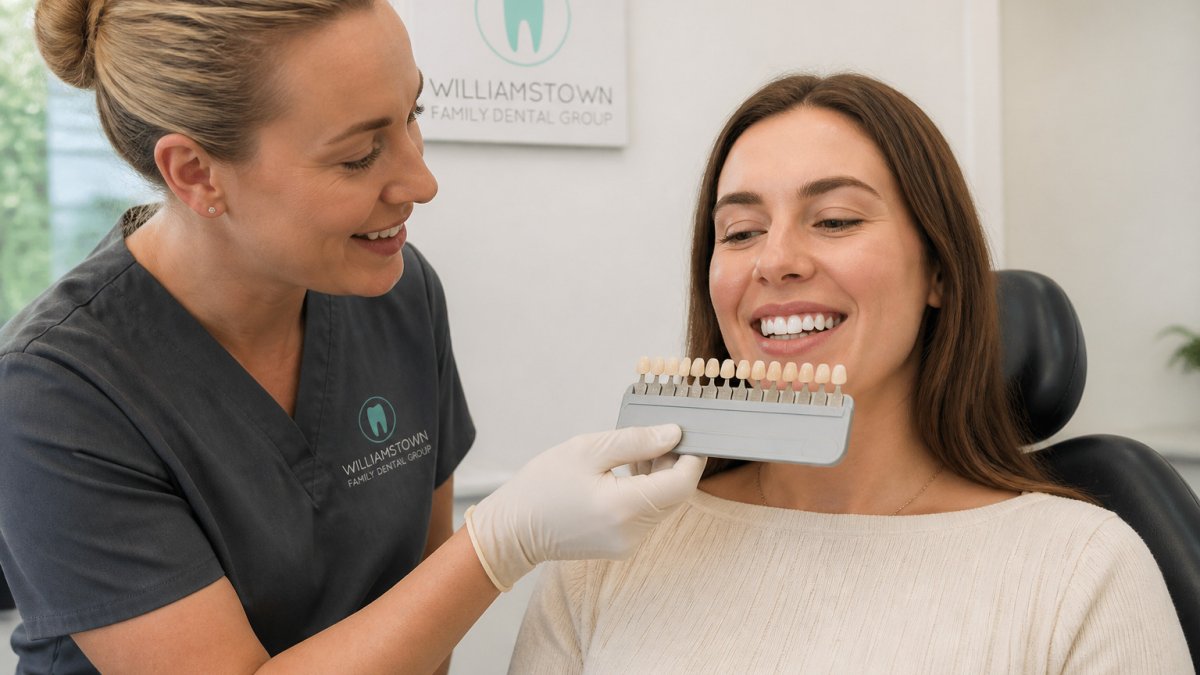
Whitening is usually the first option people ask about, and it suits teeth that are discoloured but otherwise healthy.
Whitening works best on natural stains from food, drink and ageing. It is generally less effective on some intrinsic discolouration, such as stains from certain medications, and it does not change the colour of crowns, veneers or fillings. A dentist can explain whether whitening is likely to make a visible difference for you.
Watch out: whitening can cause temporary tooth sensitivity, so ask your dentist about managing it before you start.
The table below sets out the main cosmetic options covered in this guide, matched to the problem each one generally addresses.
| Option | Best for | Key difference |
|---|---|---|
| Teeth whitening | Stained but healthy teeth | Does not change crowns, veneers or fillings |
| Porcelain veneers | Stains, chips, gaps, uneven shapes | More preparation, more permanent |
| Dental bonding | Chips and small gaps | Often completed in one visit |
| Clear aligners | Mild to moderate misalignment | Removable trays, worn most of the day |
Porcelain Veneers: When They Suit Your Smile
Porcelain veneers are thin shells bonded to the front surface of the teeth. They are commonly used to address stains that do not respond to whitening, chips, small gaps and uneven shapes. Because they change the tooth's surface, veneers involve more preparation than whitening and are a more permanent decision.
Veneers suit people with healthy teeth and gums who want a long-term change to their appearance. They are not a substitute for treating decay or gum disease, which should be addressed first. If you are considering veneers, a consultation can help you weigh the benefits against the commitment involved.
Dental Bonding for Chipped Teeth and Small Gaps
Dental bonding generally applies a tooth-coloured composite resin directly to the tooth, which is then shaped and hardened with a light. It is often a more conservative option than veneers and can usually be completed in one visit. Bonding is commonly used to repair chips, close small gaps and improve minor shape irregularities.
Composite resin can stain over time and may not be as durable as porcelain, particularly on teeth that bite hard or grind. Your dentist can advise whether bonding is appropriate for the area you want to improve.
Clear Aligners for Straighter Teeth
Clear aligners are generally a removable alternative to fixed braces for mild to moderate misalignment, using a series of custom-made trays that gradually move the teeth into a new position. Many people choose them because they are less visible than traditional braces, though the trays must be worn for most of the day to work properly.
Aligners are not suitable for every bite problem. A dentist or orthodontist will assess whether they are appropriate for your teeth before you begin. Treatment length and cost depend on the complexity of the case, so ask for a clear plan and quote during your consultation.
How Long Cosmetic Dental Treatments Last
Durability varies widely between treatments, and it depends heavily on oral hygiene, diet and habits such as teeth grinding. Whitening results fade gradually and can usually be refreshed. Bonding tends to need repair or replacement sooner than porcelain. Veneers are generally long-lasting when they are well maintained, while clear aligners require retainers afterwards to keep teeth in position.
Regular check-ups help protect any cosmetic work you have. Your dentist can check the condition of restorations and advise when a touch-up or replacement may be needed.
Choosing the Right Option for Your Smile at Williamstown Family Dental Group
The best cosmetic option depends on your teeth, your gum health, your budget and how much change you want. Our approach at Williamstown Family Dental Group is preventive and honest: we focus first on oral health, then discuss cosmetic goals that suit your situation. We are a preferred provider for Medibank, Bupa and HCF, and we are open on Saturdays for patients with busy schedules. Our clinical staff are trained in up-to-date infection control procedures.
If you are unsure which option fits you, book a consultation to discuss your goals. Make an Appointment with our team, or explore porcelain veneers to see how they could work for your smile.
Frequently Asked Questions
What are the best cosmetic dental options for improving a smile?
The best cosmetic dental option depends on what needs correcting. Teeth whitening suits discolouration without changing tooth shape, while porcelain veneers can reshape, close gaps and mask stubborn stains. Dental bonding is a conservative choice for small chips and gaps, and clear aligners address alignment. A consultation with a qualified dentist is the best way to match the treatment to your teeth, gums and goals, as the right choice differs from one person to the next.
Are veneers or teeth whitening better for improving a smile?
Whitening is usually the first step when the main concern is colour, because it is less invasive and does not alter the tooth. Veneers are better suited when shape, size, alignment or deep staining is the issue, but they involve some removal of tooth structure and are harder to reverse. Your dentist can advise which suits your teeth after an examination, and some people combine the two approaches.
How long do cosmetic dental treatments last?
Durability varies by treatment and by how well it is cared for. Whitening results commonly fade over time with diet, smoking and coffee or tea, so touch-ups may be needed. Bonding can stain or chip over time and may need repair or replacement. Porcelain veneers are generally long-lasting with good oral hygiene and regular check-ups. Your dentist can give a realistic outlook for your specific treatment.
Are cosmetic dental treatments suitable for everyone?
Not everyone is a good candidate. Gum disease, decay, untreated tooth problems and grinding habits may need to be addressed first, and some treatments are not suitable during pregnancy or for young people whose teeth are still developing. A dental assessment will identify whether a cosmetic option is appropriate for your oral health and expectations.