 ultimate-guide
The Benefits of Preventive Dental Care: A Complete Guide
Quick Summary
Preventive dental care is the set of routine habits and professional visits that stop oral disease before it starts or catch it while still easy to treat. It protects teeth and gums far more cheaply than repairing damage later. Regular check-ups, professional cleaning and daily hygiene are its core elements.
- For every $1 spent on preventive dental care, patients can save between $8 and $50 on restorative and emergency treatment.
- Brush for two minutes, twice a day, using a soft-bristled brush and fluoride toothpaste.
- Most people attend a check-up every six months, but the right interval depends on individual risk.
- Interdental cleaning removes plaque that a toothbrush cannot reach, so it belongs in the daily routine.
- Calculus can only be removed by a dental professional during a scale and clean.
Table of Contents
- What Preventive Dental Care Means and Why It Matters
- The Core Benefits of a Regular Preventive Routine
- Building a Daily Oral Hygiene Routine That Works
- How Often Regular Dental Check-Ups Should Happen
- What Professional Teeth Cleaning Removes and What Happens at Your Appointment
- Preventing Tooth Decay and Gum Disease: Risk Factors and Early Warning Signs
- Booking Your Next Preventive Check-Up at Williamstown Family Dental Group
- Frequently Asked Questions
What Preventive Dental Care Means and Why It Matters
Last Updated: November 1, 2026
Preventive dental care is the set of routine habits and professional visits that stop oral disease before it starts, or catch it while it is still easy to treat. Williamstown Family Dental Group focuses on this approach because it protects teeth and gums far more cheaply than repairing damage later.
Preventive dentistry is the practice of maintaining oral health through regular check-ups, professional cleaning, daily hygiene and early detection, rather than waiting for pain or visible damage. The aim is to reduce risk, not simply to treat what has already gone wrong.
The evidence for this approach is strong. For every $1 spent on preventive dental care, patients can save between $8 and $50 on restorative and emergency treatment, according to UnitedHealthcare Dental's analysis of preventive versus restorative care.
The Core Benefits of a Regular Preventive Routine
The main benefit is early detection. Cavities, gum inflammation and enamel loss are far easier to manage when they are small, and a routine check-up is where they are usually found.
Prevention also reduces the need for invasive treatment. Fillings, root canals and crowns are needed when decay or infection has progressed, so catching problems early means less drilling, fewer appointments and lower costs over time.
There are benefits beyond the mouth as well. Good oral health is linked to better control of diabetes and to lower rates of certain cancers, which is why many people now treat their dental check-ups as part of their general health maintenance.
The main benefits of a regular preventive routine are summarised below, drawn from the points made in this section.
| Benefit | What it means | Source point |
|---|---|---|
| Early detection | Cavities and gum inflammation are easier to manage when small | Found at routine check-ups |
| Less invasive treatment | Fewer fillings, root canals and crowns needed | Catching problems early |
| Lower long-term costs | Fewer appointments and less drilling over time | Prevention reduces treatment need |
| Wider health links | Oral health linked to diabetes control and certain cancers | Treated as general health maintenance |
| Early visits for high-risk children | Particularly valuable for children at high risk of dental disease | Early visits |
Building a Daily Oral Hygiene Routine That Works
Daily habits do most of the work between appointments, but the details matter more than most people realise. A routine that is consistent but poorly executed will leave plaque in the places that cause decay and gum disease. The guidance below reflects what dental professionals commonly recommend and what the evidence supports.
Brushing Technique, Fluoride and Timing
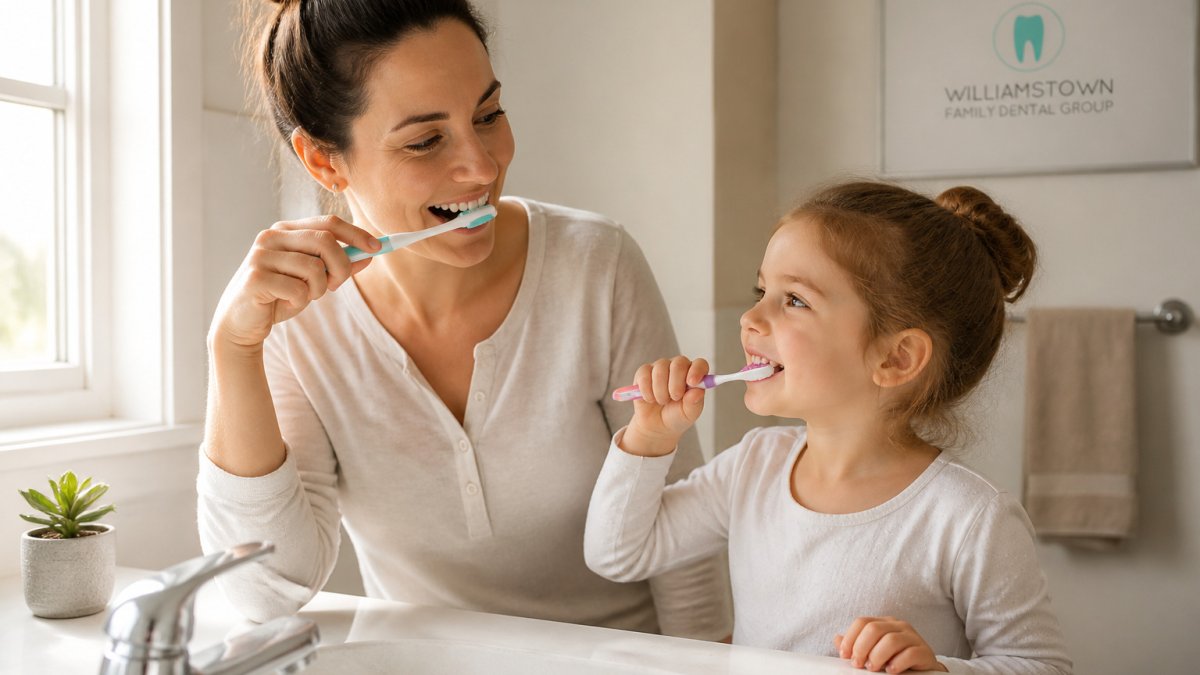
Brush for two minutes, twice a day, using a soft-bristled brush and a fluoride toothpaste. Angle the bristles at about 45 degrees towards the gumline and use small, gentle circular movements rather than a back-and-forth scrub. Cover every surface: the outside, the inside and the chewing surfaces of each tooth.
Fluoride concentration matters. For people at higher risk of decay, a dentist may recommend a higher-concentration toothpaste. Children need a lower-fluoride toothpaste appropriate to their age, and a dentist or pharmacist can advise on the right strength.
Replace a toothbrush when the bristles splay, typically every three months, and sooner if you have been unwell. An electric toothbrush with a timer can help with consistency, but technique matters more than the type of brush.
Interdental Cleaning: Floss or Interdental Brushes
Cleaning between the teeth removes plaque that a toothbrush cannot reach, and it should be part of the daily routine. The choice between floss and interdental brushes depends on the size of the gaps between your teeth and your dexterity. Interdental brushes are often more effective for people with larger gaps or gum recession, while floss suits tighter contacts. A dentist or hygienist can show you which tool fits your mouth and how to use it without damaging the gums.
If you have braces, bridges or implants, ask your dental professional for specific cleaning advice, because the routine differs from that for natural, unworn teeth.
Age-Specific Routines for Children, Adults and Older People
Children need a parent-supervised routine until they can brush and floss reliably on their own, which is usually around age seven or eight. Use a small smear of age-appropriate fluoride toothpaste for young children, and help with flossing once teeth start to touch.
Adults benefit most from consistent twice-daily brushing and daily interdental cleaning, plus attention to diet and smoking. If you wear a night guard or have orthodontic retainers, clean them as directed and bring them to check-ups.
Older adults often face dry mouth, gum recession and reduced dexterity. Gentle brushing, fluoride care and regular review with a dentist become more important with age. People with additional needs, such as arthritis or cognitive impairment, may benefit from adapted brushes, electric toothbrushes with larger handles, or assistance from a carer.
How Often Regular Dental Check-Ups Should Happen
Most people attend a check-up every six months, and this is the interval many dentists recommend for general prevention. But the evidence does not support a single schedule for everyone. Recall frequency should depend on your oral health and individual risk, not a fixed rule.
Risk-Based Recall Intervals
A dentist assesses your risk when deciding how often to see you. Higher-risk patients may need visits every three to six months, while lower-risk patients may be safely seen every twelve months or longer. Risk factors include a history of decay or gum disease, diabetes, smoking, dry mouth, poor oral hygiene, a weakened immune system, and certain medications. Pregnancy and orthodontic treatment can also change the picture temporarily.
A common pattern in practice is to review risk at each visit and adjust the interval accordingly. If your risk changes, for example, you develop gum inflammation or start a new medication, your recall interval may shorten. If your oral health is stable over several visits, your dentist may extend it.
What to Ask at Your Check-Up
You can take an active role in your recall schedule. Ask your dentist:
- What is my current risk level, and why?
- Which factors are driving that risk?
- What could I change to reduce my risk and potentially extend my interval?
- When should I book my next visit, and what should I watch for in between?
These questions help you understand the reasoning behind the schedule and make it easier to follow.
Access, Cost and Insurance Considerations
Private health insurance can affect the cost of regular visits. Health funds differ in what they cover for preventive check-ups and cleans, so check your own policy before booking. Before you book, check what your fund pays for and whether there are waiting periods or annual limits. If you do not have insurance, ask the practice about fees and payment options upfront.
If you are unsure whether it is time to book, book a check-up with Williamstown Family Dental Group to review your risk and interval. You can also read signs you need a dental check-up and when to book for the warning signs that should not wait.
What Professional Teeth Cleaning Removes and What Happens at Your Appointment
A professional clean, usually called a scale and clean, removes plaque and calculus (hardened plaque) that brushing cannot shift. It also lets the dentist check your teeth, gums and mouth for early changes. Calculus can only be removed by a dental professional, which is why it matters even for people who brush carefully.
A preventive appointment typically includes a visual examination, a review of your medical and dental history, gum assessment, and a clean. Your dentist may also discuss diet, hygiene technique and any changes they have noticed since your last visit.
Preventing Tooth Decay and Gum Disease: Risk Factors and Early Warning Signs
Tooth decay and gum disease share several risk factors. Frequent sugar intake, especially sugary drinks and snacks eaten throughout the day, increases the acid attacks that cause decay. Smoking increases the risk of gum disease and makes it harder to heal. Poor hygiene and dry mouth raise risk further.
Watch for early warning signs such as bleeding gums when you brush, persistent bad breath, tooth sensitivity, or gums that look red or swollen. These signs are worth raising at your next check-up. Persistent pain, swelling or a fever should prompt an urgent appointment rather than waiting.
Children can benefit from protective options such as fissure sealants, which can help protect the deep grooves of molars from decay. Ask your dentist whether they are suitable for your child.
Booking Your Next Preventive Check-Up at Williamstown Family Dental Group
Preventive care works best when it becomes a habit. If you are due for a check-up, or you have not been seen in a while, the team at Williamstown Family Dental Group can review your oral health and recommend a schedule that suits you and your family. Make an appointment to start your next preventive routine.
Frequently Asked Questions
What are the benefits of getting preventive dental care?
Preventive dental care helps you spot cavities, gum problems and other issues while they are still small and simple to treat. Preventive care can reduce the cost of later restorative and emergency treatment. Regular cleaning removes plaque that brushing misses, which lowers the chance of gum disease and tooth loss. A routine visit also gives your dentist a chance to check your mouth for changes that might point to wider health issues, such as links between gum disease and diabetes. Costs and rebates depend on your health fund and the services you choose, so check your cover before booking.
How often should I have a dental check-up?
Many adults are advised to have a professional check-up and clean every six months, but the right interval depends on your teeth, gums and risk factors. Someone with a history of decay, gum disease, smoking or diabetes may need visits more often, while a person with healthy gums and few risks may be seen less frequently. Children's needs also change with age. Your dentist can recommend a schedule that fits you after an examination, so ask at your next regular dental check-up what interval suits your mouth.
When should children start having regular dental check-ups?
Children should have their first dental visit around the time their first tooth appears or by their first birthday, according to general guidance in the research. Early visits help establish good habits and let the dentist spot early decay before it causes pain. Parents can help by brushing with a small amount of fluoride toothpaste, limiting sugary snacks and drinks, and making appointments feel calm and routine.
What should I do at home to prevent tooth decay and gum disease?
Brush your teeth twice a day for about two minutes using a soft-bristled toothbrush and fluoride toothpaste. Clean between your teeth once a day with floss or interdental brushes, since a toothbrush does not reach every surface. Limit how often you eat or drink sugary foods, because frequent exposure to sugar drives decay more than the total amount. Quit smoking if you smoke, as it raises the risk of gum disease. If you notice bleeding gums, persistent bad breath or tooth sensitivity, book an appointment rather than waiting.
What does a preventive dental care routine include?
A complete routine combines daily home care with professional support. At home, that means twice-daily brushing, daily interdental cleaning and sensible eating habits. Professionally, it includes regular examinations, scale and clean sessions to remove plaque and tartar, and fluoride treatment where suitable. Your dentist may also check for early signs of oral cancer and discuss any risk factors you have. Ask about current arrangements when you book.