 ultimate-guide
Family Dental Clinic Health Fund: A Complete Guide
Table of Contents
- How Health Funds Work With Family Dental Clinics
- Preferred Provider vs Non-Preferred: What's the Difference
- Common Dental Services Covered by Health Funds
- Understanding Dental Gap Payments Explained
- How to Find a Dentist That Accepts Health Funds
- HICAPS Dental Claims: Simplifying Your Rebates
- Choosing the Right Family Dental Clinic for Your Needs
- Frequently Asked Questions
Last Updated: October 4, 2026
How Health Funds Work With Family Dental Clinics
A family dental clinic health fund is a partnership between your dental practice and your health insurance provider that allows you to claim rebates directly at the appointment. Rather than paying the full fee upfront and claiming a rebate later, preferred provider arrangements let you pay only the gap, the difference between the clinic's fee and your health fund's benefit.
Here's the practical reality: when you visit a preferred provider, your dentist is contracted with your health fund. They've agreed to accept a set fee schedule for certain treatments. Your fund pays its portion directly to the clinic, and you pay the remainder on the day. This arrangement simplifies the claims process and often reduces your out-of-pocket costs compared to visiting a non-preferred dentist.
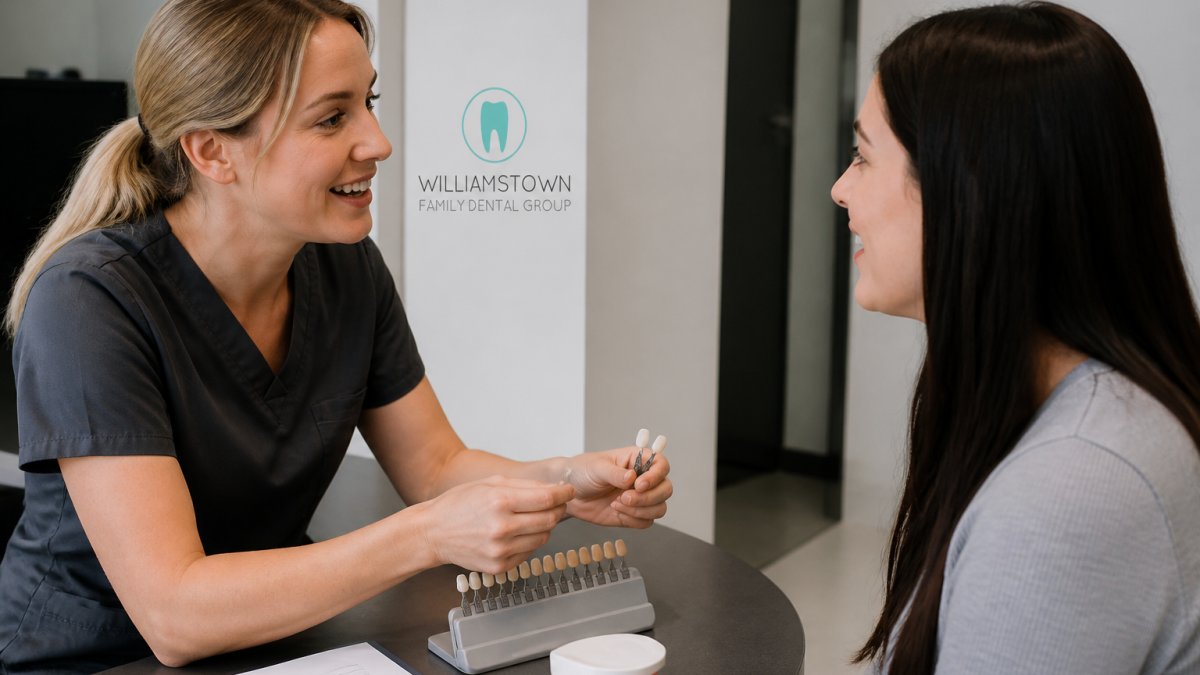
At Williamstown Family Dental Group, we work as preferred providers for major health funds. This means your family can access comprehensive dental care, from routine check-ups to restorative work, with transparent, predictable costs. The preventive approach we emphasise means two free check-ups, cleans, and fluoride treatments per year for eligible members, which helps catch issues early before they become expensive problems.
The key advantage is simplicity. No forms to fill out, no waiting for rebates, no surprises at the counter. You know your gap payment before treatment begins.
Preferred Provider vs Non-Preferred: What's the Difference
The distinction between preferred and non-preferred dentists determines how much you'll pay and how quickly you'll get your rebate.
A preferred provider has a contract with your health fund. They've agreed to charge set fees for specific treatments and accept the fund's benefit as part of their payment. When you attend, the fund pays them directly, and you pay only the gap. This is the most economical route for most families because the clinic has committed to reasonable fee structures.
A non-preferred dentist has no contract with your fund. You pay their full fee at the appointment, then submit a claim to your health fund yourself. The fund sends its benefit to you, not the dentist. This means you're out of pocket for the full amount initially, and you wait for reimbursement, sometimes weeks.
The practical impact: with a preferred provider, you walk out knowing exactly what you've paid. With a non-preferred dentist, you might pay the full fee upfront, claim a rebate later, and realise your out-of-pocket costs were higher than with a preferred provider. Over a family's lifetime of dental care, choosing preferred providers can lead to more predictable costs.
Williamstown Family Dental Group operates as a preferred provider for Medibank, Bupa, and HCF. This positioning means your family gets immediate clarity on costs and faster access to your benefits. We're transparent about gap payments before any treatment.
Common Dental Services Covered by Health Funds
Most health funds cover similar categories of dental treatment, though the benefit levels and annual limits vary by your specific policy.
Basic preventive care is almost universally covered: routine check-ups, cleans, and fluoride treatments typically attract 100% rebates. This is why we emphasise preventive dentistry, these visits are heavily subsidised, and catching problems early prevents expensive treatment later.
Diagnostic services like X-rays and oral health assessments are usually covered as part of a check-up visit. Some funds have separate annual limits for X-rays, so it's worth checking your policy documents.
Restorative treatments such as fillings, root canal therapy, and crowns are typically covered at 50% of the fund's benefit schedule. This means your gap payment depends on both the fund's set amount and your dentist's fee.
Dentures and major prosthetics often attract 50% cover, though annual limits apply. Seniors requiring denture fitting and ongoing maintenance should check whether their policy includes adjustments and relines, as these vary significantly between funds.
Orthodontics is covered by some funds but not others, and when it is covered, the benefit is usually limited. Check your policy before committing to braces or aligners.
Cosmetic treatments like teeth whitening, veneers, and smile makeovers are rarely covered by health funds because they're classified as elective.
The critical point is that coverage levels vary. The benefit for a crown can vary significantly between different health funds.
Understanding Dental Gap Payments Explained
A dental gap payment is the amount you pay out of pocket after your health fund's rebate. It's the gap between what your dentist charges and what your fund covers.
The calculation is straightforward: your dentist's fee minus your health fund's benefit equals your gap.
This is where preferred provider arrangements shine. Because preferred providers have agreed to align their fees with health fund schedules, the gap is predictable and transparent. You know before treatment starts exactly what you'll pay.
Non-preferred dentists can charge whatever they wish, so your gap becomes unpredictable.
At Williamstown Family Dental Group, we're transparent about gap payments before any treatment. We'll quote your expected gap based on your specific health fund and the treatment plan. This honesty addresses a common concern: families worry they'll be blindsided by costs. We ensure you make informed decisions with full cost visibility upfront.
How to Find a Dentist That Accepts Health Funds
Finding a dentist that accepts your health fund requires a few deliberate steps, and the effort pays off significantly.
Start by checking your health fund's website. Most funds maintain searchable directories of preferred providers by treatment type and location. You can filter by suburb, dentist name, or specific services. This is the fastest route to accurate, current information because the fund updates its provider lists regularly.
Call your fund's customer service line if you can't find what you need online. They can confirm which dentists in your area are preferred providers and which funds those dentists accept. This conversation also clarifies your specific policy's benefits, which vary between individuals and plans.
Once you've identified potential clinics, contact them directly. Confirm they're still preferred providers for your specific fund and ask about their current fee structure.
Read reviews and ask for recommendations from family and friends. A clinic that's preferred for your fund is a good start, but you also want practitioners who are experienced, patient, and align with your family's needs. Busy professionals need Saturday availability. Parents with anxious children need a gentle, child-friendly approach.
Williamstown Family Dental Group accepts Medibank, Bupa, and HCF as preferred providers across our full range of services. We're open on Saturdays, which addresses the common scheduling challenge for working families.
HICAPS Dental Claims: Simplifying Your Rebates
HICAPS is an electronic claims system that simplifies the rebate process. Rather than submitting paper claims to your health fund after your appointment, HICAPS transmits your claim electronically at the point of treatment.
Here's how it works: your dentist's practice uses HICAPS-enabled software to submit your claim directly to your health fund during your appointment. The fund processes it instantly and confirms your benefit. You pay your gap on the day, and the rebate is processed within days rather than weeks. It's faster, more transparent, and eliminates the paperwork burden.
Not all dentists use HICAPS, which is why it's worth asking when you call to book. Preferred providers are more likely to have HICAPS capability because it simplifies their claims processing too. Non-preferred dentists may not use it, which means you'll be submitting claims manually.
The advantage for families is immediate clarity. You know your rebate amount before you leave the chair. There's no uncertainty about whether your claim will be accepted or how much you'll receive. This is particularly valuable for families managing multiple appointments, children's check-ups, parents' restorative work, grandparents' denture adjustments, because each claim is processed instantly rather than accumulating paperwork.
Williamstown Family Dental Group uses HICAPS for all major health fund claims. This means when you attend an appointment with us, your rebate is processed electronically, and you pay only your gap on the day. No forms, no delays, no surprises weeks later.
Choosing the Right Family Dental Clinic for Your Needs
Selecting a family dental clinic goes beyond finding one that accepts your health fund. You're choosing a practice that will care for your entire family across decades of dental needs.

Consider the clinic's experience with families. Do they have a separate children's area? Are the practitioners trained in paediatric dentistry? Anxious children need gentle handling, clear explanations, and a non-threatening environment.
Check whether the clinic's hours match your life. Full-time working families need Saturday appointments or evening availability. Parents juggling school runs and work need efficient scheduling.
Verify accreditation and professional credentials. An accredited dental practice meets rigorous standards for clinical competence, infection control, and patient safety. Ask about the practitioners' qualifications and experience.
Ask about the clinic's approach to treatment. Do they emphasise prevention, or do they recommend treatment aggressively? A preventive philosophy means fewer procedures overall, lower costs, and better long-term oral health.
Assess how the clinic handles anxiety and complex needs. A family member with severe dental anxiety needs a practitioner who listens, goes slowly, and doesn't minimise their fear.
Williamstown Family Dental Group was established in 2003 with a core commitment to ethical, high-quality care tailored to individual family needs.
Navigating dental care for your family involves balancing clinical quality, financial accessibility, and practical convenience. A family dental clinic that's a preferred provider for your health fund removes the financial uncertainty.
Frequently Asked Questions
How do I know if my dentist accepts my health fund?
Check your health fund's provider directory online or contact their member services team. You can also ring the dental clinic directly and ask if they're a preferred provider for your specific fund. Many clinics display their participating health funds in reception or on their website. When you book your appointment, confirm your cover status so the practice can process your claim correctly on the day.
What is the difference between preferred provider and non-preferred dental clinics?
Preferred providers have an agreement with your health fund to accept the fund's benefit as full or partial payment. Non-preferred clinics have no agreement, so you'll pay the full fee upfront and claim a rebate yourself. Preferred providers typically mean lower out-of-pocket costs because the gap payment (the difference between the clinic's fee and the fund's benefit) is often smaller or negotiated. Always ask your clinic about their preferred provider status before treatment.
Does private health insurance cover 100% of dental costs?
No. Most health funds cover a percentage of eligible dental services, typically 50-80% depending on your level of cover and the service type. Basic services like check-ups and cleans often have higher rebates, whilst cosmetic or advanced procedures may have lower cover or be excluded entirely. Gap payments (the amount you pay out-of-pocket) vary by clinic and service. Check your policy documents or contact your fund to understand your specific coverage limits and annual maximums.
What should I bring to my first appointment to process a health fund claim?
Bring your health fund membership card or details, a photo ID, and any referral letters if required by your fund. Have your member number and policy details ready so the clinic can verify your cover and process your claim on the day. If you're a new patient, arrive early to complete registration forms. Most clinics using HICAPS technology can process your rebate immediately after treatment, so you'll only pay your gap payment at reception.
How can I check my remaining annual dental limits?
Log into your health fund's online portal or mobile app to view your benefits summary and remaining annual limits. You can also ring your fund's member services line and ask them to confirm your available benefits for the calendar year. Keep track of treatments you've had, as some funds reset limits annually whilst others operate on a different schedule. Before major treatment, ask your dental clinic to check your remaining cover so you know your out-of-pocket cost in advance.
What is a dental gap payment and why do they exist?
A gap payment is the difference between what your dentist charges and what your health fund rebates. It exists because dental clinics set their own fees, which often exceed the fund's benefit schedule. Gap payments vary widely depending on the clinic, the service, and your level of cover. Preferred providers typically negotiate smaller gaps, making treatment more affordable. Always ask your clinic to estimate your gap payment before treatment so there are no surprises at the checkout.
Can I use HICAPS at any dental clinic?
HICAPS is available at most modern dental practices, but not all clinics use it. HICAPS technology allows your clinic to process your health fund claim electronically at the time of treatment, so you receive your rebate immediately and only pay your gap payment. If a clinic doesn't use HICAPS, you'll pay the full fee and claim your rebate yourself, which takes longer. When booking, ask if the clinic uses HICAPS to speed up your claims process.