 how-to
Best Ways to Maintain Dentures for Seniors
Table of Contents
- Daily Denture Cleaning Routine
- Soaking Dentures Overnight
- Denture Adhesive Best Practices
- Signs of Ill-Fitting Dentures
- Oral Hygiene for Gums and Tissues
- When to Replace Dentures
- Common Mistakes to Avoid
- Professional Denture Care and Check-ups
- Frequently Asked Questions
Last Updated: September 20, 2026
Best ways to maintain dentures for seniors involves daily cleaning, proper storage, and regular professional check-ups. At Williamstown Family Dental Group, we help seniors keep their dentures in excellent condition through practical routines that prevent damage and extend the life of their prosthetics.
Establishing a simple routine makes all the difference in how long dentures last and how well they fit.
Daily Denture Cleaning Routine
Clean dentures at least twice daily, ideally after meals and before bed, to remove food particles and plaque that cause staining, odour, and bacterial infection.
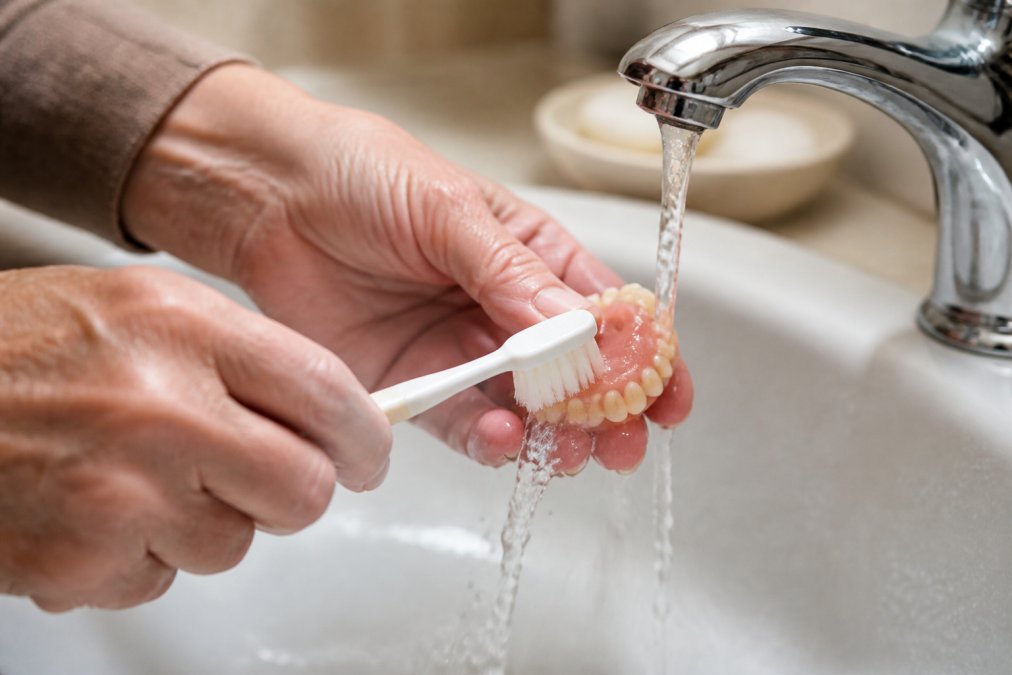
Here's how to clean dentures properly:
- Rinse dentures under lukewarm water after eating to remove loose food debris
- Use a soft-bristled brush or denture brush designed for prosthetics
- Apply mild liquid soap or denture cleanser to the brush
- Gently brush all surfaces, including the side that touches your gum tissue
- Rinse thoroughly under lukewarm water until soap is completely gone
- Inspect for cracks or damage before storing
Never use abrasive toothpaste or hard-bristled toothbrushes, which damage denture shape and create surfaces where bacteria thrive.
Soaking Dentures Overnight
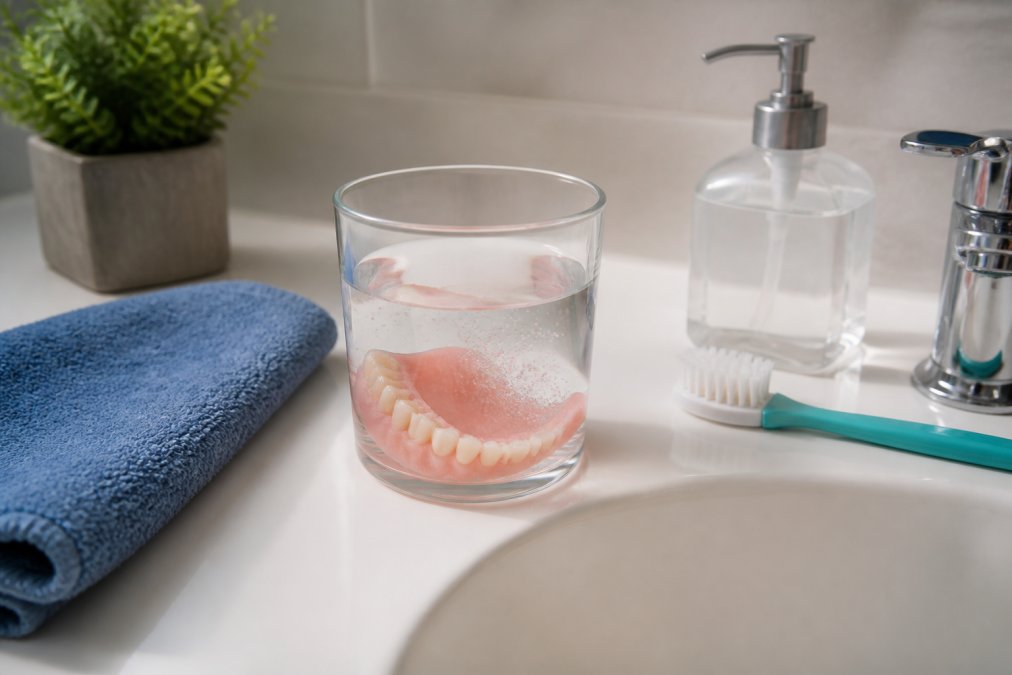
Overnight soaking is essential for denture hygiene and moisture retention, keeping them hydrated and removing stubborn stains and tartar.
Fill a denture box or cup with lukewarm water and a denture cleanser tablet. Place your dentures in the solution before bed and leave them overnight. Most dentures need 6-8 hours of soaking to clean effectively.
Key points for overnight soaking:
- Use only lukewarm water, never hot water, which warps dentures
- Follow the denture cleanser instructions carefully
- Never soak dentures in vinegar or bleach solutions
- Change the soaking solution daily to prevent bacterial growth
- Remove dentures from solution in the morning and rinse before wearing
Denture Adhesive Best Practices
Proper adhesive management is essential for long-term denture success, as incorrect use damages gums and accelerates bone loss.
Choosing the Right Adhesive Type
Three main adhesive formulations are available, each with different properties:
- Cream adhesives, Applied in small dots or a thin line along the denture ridge. They set quickly and provide moderate hold. Best for seniors with good manual dexterity who can apply precisely. Easier to remove than other types.
- Powder adhesives, Mixed with saliva to form a paste. They provide stronger hold and work well for loose-fitting dentures. More difficult to remove completely and can leave residue on gums if not cleaned thoroughly.
- Strip adhesives, Pre-formed strips that adhere to the denture base. Convenient for seniors with limited hand strength or dexterity, but more expensive and less adjustable than creams or powders.
Your dentist can recommend the best type based on your denture fit, jaw shape, and manual ability.
Correct Application Technique
Overapplication is the most common mistake, trapping food and saliva against gum tissue where bacteria thrive.
For cream adhesives:
- Apply small dots (about the size of a pea) along the inner ridge of the denture, spaced roughly 2-3 centimetres apart
- Avoid applying adhesive around the edges or in a continuous line
- Use no more than 3-4 dots per denture
- Allow the adhesive to set for 30 seconds before inserting the denture
For powder adhesives:
- Dampen the denture base slightly with water
- Sprinkle powder evenly across the inner surface
- Tap off excess powder
- Insert the denture and bite gently to activate the adhesive
A properly fitting denture requires minimal adhesive; increasing amounts signal that relining is needed.
Daily Adhesive Residue Removal
Daily adhesive residue removal is critical; residue left on gums causes irritation, inflammation, and accelerated bone loss.
Each evening before bed:
- Remove your dentures
- Use a damp washcloth or soft cloth to gently wipe your gums and palate, focusing on areas where adhesive was applied
- For stubborn residue, soak a cloth in lukewarm water and hold it against the affected area for 30 seconds, then gently rub
- Rinse your mouth thoroughly with lukewarm water
- If irritation persists, rinse with salt water (1 teaspoon salt in 250 millilitres warm water) 2-3 times daily
Never use fingernails or hard objects to scrape adhesive, as this causes micro-tears and increases infection risk.
Troubleshooting Adhesive Problems
Adhesive not holding dentures securely: This indicates poor denture fit, not inadequate adhesive.
When to Seek Professional Help
Signs of Ill-Fitting Dentures
Warning Signs of Poor Fit
Watch for these common indicators:
- Dentures slip or click when you eat or speak
- Sore spots develop on your gums or palate
- Food gets trapped between dentures and gum tissue
- Difficulty chewing or speaking clearly
- Dentures feel loose in the morning after soaking
- Persistent bad breath despite good cleaning
- Visible gaps between dentures and gum tissue
- Dentures move when you laugh or cough
- Uneven pressure or pain concentrated in one area
- Difficulty keeping dentures in place without excessive adhesive
Distinguishing Cleaning Issues from Fit Problems
Adhesive residue buildup, If dentures feel loose, clean your gums thoroughly with a damp cloth and soak dentures in cleanser solution for 20 minutes. If fit improves, the problem was residue, not denture shape.
When Professional Relining Is Needed
Seek relining if:
- Looseness persists despite thorough cleaning and proper adhesive use
- Sore spots develop that don't improve after 2-3 days of careful cleaning and salt water rinses
- Food trapping between dentures and gums continues despite good oral hygiene
- Dentures feel loose in the morning even after full overnight soaking
- You require increasing amounts of adhesive to keep dentures stable
- Visible gaps appear between dentures and gum tissue
- Uneven pressure causes pain in specific areas that doesn't resolve with minor adjustments
When Denture Replacement Is Necessary
- Dentures no longer fit despite relining, indicating excessive bone loss
- Cracks or chips appear that cannot be repaired
- Denture base has become discoloured or stained permanently
- Teeth have worn down significantly from years of use
- Gum tissue has shrunk substantially (more than 5 millimetres)
- Dentures feel uncomfortable no matter how often they're adjusted or relined
- The denture base has become warped or distorted
Oral Hygiene for Gums and Tissues
Remove dentures for at least 4-6 hours daily to let gum tissue rest. Gently clean your gums and palate with a soft cloth to remove adhesive residue and stimulate blood flow. If you have remaining natural teeth, brush and floss normally. Rinse with lukewarm salt water if gums feel sore or irritated.
When to Replace Dentures
Relining extends denture life by adjusting the fit as your gum tissue changes. Your dentist can perform a reline every 1-2 years. However, relining has limits. Eventually, new dentures become the better option.
Common Mistakes to Avoid
Avoid these common mistakes: using hot water (which warps dentures), sleeping in dentures, using abrasive cleaners, leaving dentures dry, dropping them, self-adjusting, ignoring cracks, and skipping professional care. Dry dentures become brittle and crack easily.
Professional Denture Care and Check-ups
Visit your dentist at least twice yearly for professional denture cleaning and assessment. Professional cleaning removes tartar and stains that home cleaning cannot eliminate. Your dentist assesses fit, identifies damage, and detects cracks before they become serious.
Maintenance Task | Frequency | Purpose |
|---|---|---|
Daily brushing | After meals and before bed | Remove plaque and food debris |
Overnight soaking | Every night | Clean and hydrate dentures |
Adhesive removal | Every evening | Prevent gum irritation |
Professional cleaning | Every 6 months | Remove tartar and deep stains |
Denture assessment | Every 6 months | Check fit and identify damage |
Relining | Every 1-2 years | Adjust fit as gum tissue changes |
Frequently Asked Questions
What should I soak my dentures in every night?
Soak dentures overnight in a denture-specific cleanser or mild solution designed for prosthetic maintenance. Many seniors use commercial denture cleaning tablets dissolved in lukewarm water, which help remove plaque buildup and staining. Avoid using hot water, as it can warp the denture shape. Always follow the product instructions and rinse thoroughly with lukewarm water before inserting your dentures the next morning to remove any cleanser residue.
How often should I visit the dentist for a denture check-up?
Most dentists recommend a denture check-up at least once a year, though some seniors benefit from more frequent visits if they experience fit issues or gum tissue changes. Regular dentist consultations help catch problems early, such as bacterial infection signs or denture damage. Your dentist can also assess whether relining or adjustments are needed. At Williamstown Family Dental Group, we provide two free check-ups, cleans and fluoride treatments a year as part of our preventive approach.
Can I leave dentures in cleaning solution all night?
Yes, overnight soaking is actually recommended for denture care. Soaking dentures in a gentle cleanser or lukewarm water with a denture tablet helps maintain moisture retention and removes accumulated plaque and tartar. However, do not use hot water, as it damages the denture material. Most commercial denture cleansers are safe for extended soaking, but always check the product label for specific instructions. After soaking, rinse your dentures thoroughly before wearing them.
What are the signs my dentures need professional adjustment?
Signs of ill-fitting dentures include slipping or shifting during eating or speaking, sore spots on your gums, difficulty chewing, or persistent bad breath (halitosis). Discomfort, clicking sounds, or visible gaps between the denture and gum tissue indicate you need a dentist consultation. Gum tissue changes naturally over time, so dentures may require relining or adjustment. Do not ignore these signs, as continued use of ill-fitting dentures can lead to bacterial infection and tissue damage. Contact your dentist promptly for professional evaluation and repair.