 How-to
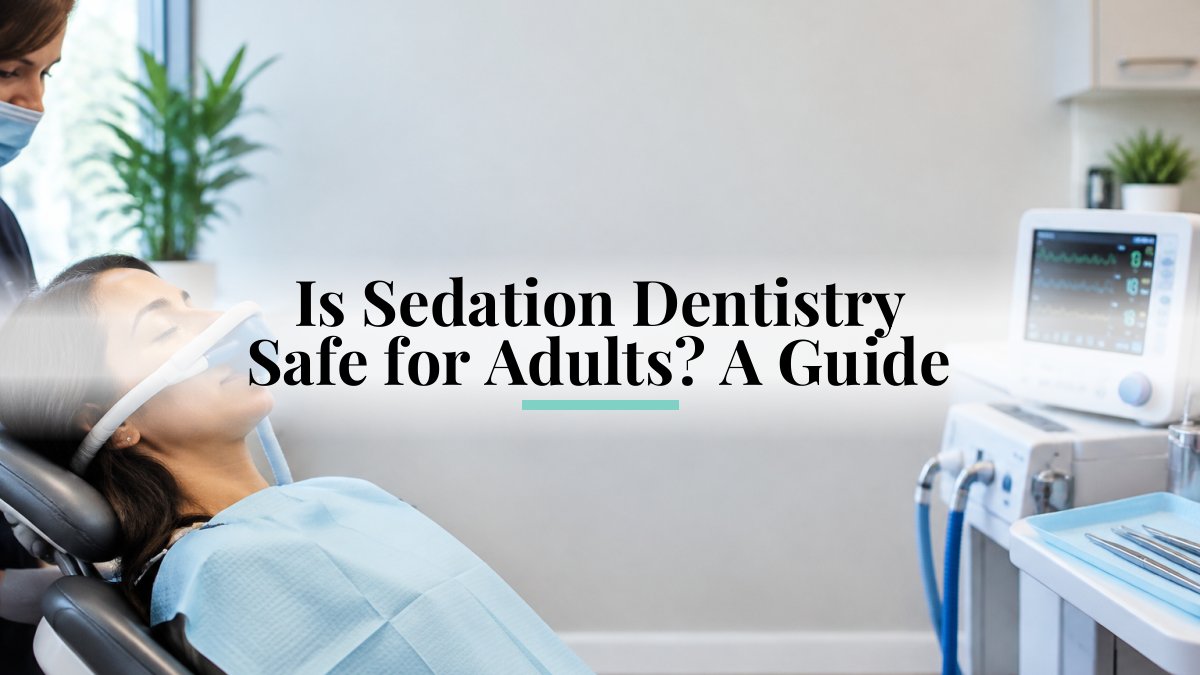
Is Sedation Dentistry Safe for Adults? A Guide
Last Updated: November 15, 2026
Quick Summary
Sedation dentistry is well tolerated for most healthy adults when a trained clinician assesses you first and monitors you throughout. A 2026 review reports overall adverse events below five percent, with nitrous oxide described as the safer option for outpatient use. Suitability is a clinical decision based on your medical history, medications and anxiety level.
- Most dental sedation for adults sits at the minimal to moderate level rather than deep sedation.
- Oral midazolam was found effective and safe, including in older adults, though you need an escort home.
- Older adults should start on a lower dose and titrate slowly because sedatives linger longer.
- Tell your dentist about all medicines, sleep apnoea and past reactions to sedatives before treatment.
- Avoid alcohol for at least 24 hours after sedation and do not drive until effects fully wear off.
Table of Contents
- Sedation Dentistry for Adults: What the Evidence Shows
- Types of Dental Sedation for Adults
- Who Is a Suitable Candidate for Dental Sedation
- Dental Sedation Risks and Side Effects
- Dental Sedation Preparation for Adults
- How Long Does Dental Sedation Last?
- Book a Sedation Consultation at Williamstown Family Dental Group
- Frequently Asked Questions
Sedation Dentistry for Adults: What the Evidence Shows
Sedation dentistry is the use of medication to help you relax during dental treatment. If you are an anxious adult wondering whether it is safe, the short answer is that for most healthy adults, dental sedation is well tolerated when a trained clinician assesses you first and monitors you throughout.
The evidence base is reassuring but not absolute. A review of nitrous oxide and oral sedation for managing dental anxiety, published in a 2026 review on PubMed Central, reports overall adverse events below five percent and describes nitrous oxide as the safer option for outpatient use. The same review notes wide variation in protocols and few randomised controlled trials, which means no single method is risk-free for every adult.
How Sedation Dentistry Differs from General Anaesthesia
The key difference is consciousness. General anaesthesia puts you fully to sleep and you cannot respond. Sedation keeps you conscious or lightly drowsy, so you can still breathe on your own and respond to the dentist.
- General anaesthesia: complete unconsciousness, breathing supported, hospital setting
- Deep sedation: barely awake, may not recall the procedure
- Moderate sedation: drowsy but responsive, the most common level for dental treatment
- Minimal sedation: awake and calm, often using nitrous oxide
Most dental sedation for adults sits at the minimal to moderate level. That is why it is generally safer for outpatient care than general anaesthesia.
Types of Dental Sedation for Adults
Three main types of dental sedation are used for adults, and each suits different levels of anxiety and different procedures.
Nitrous oxide, often called laughing gas, is breathed through a small mask. It works within minutes and wears off quickly, so you can usually drive yourself home afterwards.
Oral sedation means taking a tablet, usually a benzodiazepine such as midazolam, before your appointment. It produces drowsiness and can make you feel relaxed for several hours.
IV sedation delivers sedative medication directly into a vein. The dentist can adjust the dose moment to moment, which makes it useful for longer procedures such as tooth extraction or a bone graft. It requires closer monitoring.
Comparing Sedation Levels at a Glance
| Type | Awareness | Onset | Recovery | Escort needed |
|---|---|---|---|---|
| Nitrous oxide | Awake, calm | Minutes | Minutes | Usually no |
| Oral sedation | Drowsy | 30-60 minutes | Several hours | Yes |
| IV sedation | Deeply relaxed | Immediate | Rest of day | Yes |
Who Is a Suitable Candidate for Dental Sedation
Most healthy adults are suitable, but suitability is a clinical decision, not a self-assessment. Your dentist weighs your medical history, medications and anxiety level before recommending anything.
You may be a good candidate if you have strong dental anxiety, a sensitive gag reflex, a low pain threshold, or you need a long or complex procedure. If anxiety is your main concern, our guide on how to manage dental anxiety covers practical steps you can try before your visit.
Some adults need extra caution. This includes people with certain heart or lung conditions, sleep apnoea, or those taking medications that interact with sedatives. In these cases, your dentist may adjust the plan or refer you to a specialist.
Dental Sedation Risks and Side Effects
Dental sedation carries real risks that are managed through careful assessment and monitoring. The more useful question for an adult is not whether sedation is risky in the abstract, but which factors in your own health profile change the balance.
Common side effects include:
- Drowsiness that lasts several hours
- Nausea or vomiting
- Headache
- Dry mouth
- Feeling unsteady on your feet
These are usually temporary and settle as the medication wears off. Less common but more serious risks include slowed breathing and low oxygen levels. That is why monitoring matters. Your oxygen levels and vital signs should be watched throughout, and a trained professional should be present with emergency equipment on hand. Some people given sedatives such as midazolam can become agitated rather than calm. Knowing this in advance helps your dentist respond.
Adult-Specific Factors That Change the Risk Picture
Age alone does not rule out sedation, but it changes how sedatives are handled. Older adults tend to have more body fat and lower liver and kidney clearance, so a dose that suits a younger adult can linger longer and hit harder. A common pattern is to start lower and titrate slowly rather than rely on a standard dose.
Several conditions deserve a specific conversation before any sedative is given:
- Sleep apnoea and snoring: sedatives relax the upper airway and can worsen obstruction, so your dentist may avoid deeper sedation or arrange closer monitoring.
- Obesity: changes how fat-soluble drugs are distributed and can affect breathing, so dosing and monitoring plans are adjusted.
- Heart and lung conditions: some sedatives affect blood pressure, heart rate or breathing, and your dentist may seek input from your treating doctor.
- Pregnancy and breastfeeding: suitability depends on the trimester and the drug, and non-drug anxiety management is often tried first.
- Alcohol use: regular heavy drinking can increase tolerance and withdrawal risk, which affects both dose and safety.
- Prescription and recreational medicines: benzodiazepines, opioids, some antidepressants and antihistamines can add to sedation, and so can recreational drugs. Disclose all of them, including anything you take occasionally.
Watch out: combining sedatives with alcohol or opioid painkillers in the days around your appointment can turn a manageable level of sedation into significant breathing risk, so tell your dentist what you actually take rather than what you think they want to hear.
Emergency Readiness and the Limits of the Evidence
Most dental practices that offer sedation keep oxygen, suction, a defibrillator and reversal medication such as flumazenil on hand, and staff rehearse what to do if a patient becomes over-sedated. Ask what your practice has and who is trained to use it. The evidence base is reassuring but not absolute: the same review notes wide variation in protocols and few randomised controlled trials, so no single method is risk-free for every adult. That is not a reason to avoid sedation, but it is a reason to choose a clinician who assesses you first and monitors you throughout.
Dental Sedation Preparation for Adults
Preparation makes sedation safer and smoother, and the most useful version of this advice is a checklist you can act on rather than a general reminder to follow instructions.
Before Your Appointment: What to Disclose and Ask
Bring a written list of every medicine you take, including supplements, inhalers, creams and anything you take only occasionally. Include doses. Then disclose:
- Any heart, lung, kidney or liver condition
- Sleep apnoea, heavy snoring or a CPAP machine
- Pregnancy or breastfeeding
- Recent alcohol or recreational drug use
- Past reactions to sedatives or anaesthetics, including feeling agitated rather than calm
- Allergies
Ask your dentist directly:
- Who will administer the sedation, and what training and registration do they hold?
- Who monitors me during treatment, and is that person solely monitoring or also assisting?
- What monitoring is used, such as pulse oximetry and blood pressure?
- What emergency equipment and reversal drugs are on site?
- What is the plan if I become over-sedated?
A practice that answers these questions plainly is showing you its safety culture. If the answers are vague, that is useful information.
Fasting, Escorts and the Day Itself
Follow your dentist's fasting instructions exactly, because eating before sedation can increase the risk of vomiting. Arrange for a responsible adult to escort you home and stay with you for the rest of the day.

Before your appointment, tell your dentist about every medication you take, including supplements. Bring a list. If you want to know what the appointment itself involves, our page on your first visit explains what to expect on the day.
Recovery by Sedation Type
Recovery is not one experience. Nitrous oxide wears off within minutes, and most adults can return to normal activity shortly afterwards, though driving should wait until you feel fully alert. Oral sedation typically leaves you drowsy for several hours, often the rest of the day, so plan for no driving, no work and no important decisions.
For all types, have soft food and water ready at home, avoid alcohol for at least 24 hours, and rest. Do not drive, operate machinery, or sign anything important until the effects have fully worn off. Most adults feel back to normal within a day, though this varies from person to person and with the dose used.
How Long Does Dental Sedation Last?
How long dental sedation lasts depends on the type you receive. Nitrous oxide wears off within minutes of the mask coming off. Oral sedation typically leaves you drowsy for several hours, often the rest of the day. IV sedation effects usually fade over a few hours, but you may feel groggy for longer.
Plan your day around recovery. Do not drive, operate machinery, or make important decisions until the effects have fully worn off. Have soft food and water ready at home, and rest. Most adults feel back to normal within a day, though this varies from person to person.
Book a Sedation Consultation at Williamstown Family Dental Group
Choosing sedation is a decision best made with a qualified dentist who knows your health history. Our team is led by Dr Leslie Tu and our experienced clinicians, and we have been caring for local families since 2003.
We are an accredited practice. Our clinical staff are trained in up-to-date infection control procedures, and our practice uses a TGA-approved German Melag B-class autoclave. You can read more about our technology and infection control standards.
If you are ready to take the next step, our guide on how to book a dental appointment online walks you through the process. We are open on Saturdays.
Wondering whether sedation is right for you? The safest path is a proper assessment, not guesswork.
Frequently Asked Questions
Is sedation dentistry safe for adults?
For most healthy adults, sedation dentistry is considered safe when a qualified dentist assesses you first. Published reviews of dental sedation generally report that serious adverse events are uncommon when patients are properly assessed and monitored. Safety depends on your medical history, medication interactions and the level of sedation used. A full assessment, informed consent and monitoring during treatment are what make sedation dentistry safe in practice, so discuss your health conditions openly with your dentist before proceeding.
What are the risks of sedation dentistry?
Dental sedation risks and side effects include drowsiness, nausea and, with some sedatives, agitation rather than calm. Deeper sedation carries higher risk than nitrous oxide or oral sedation. Your dentist manages these risks through patient assessment, dosage control and monitoring of vital signs and oxygen levels. Tell your dentist about all medications, as interactions can raise risk. Emergency protocols and trained staff are part of what keeps complications rare.
How should adults prepare for dental sedation?
Dental sedation preparation for adults usually involves fasting instructions, arranging an escort to take you home, and disclosing your full medical history and medications. Wear loose, comfortable clothing and avoid driving yourself. Follow your dentist's specific fasting and medication guidance exactly, as protocols vary between practices. Bring a list of current prescriptions and any allergies. If you feel unwell on the day, tell the clinic before your appointment so they can advise whether to reschedule.
How long does dental sedation last, and can I drive afterwards?
How long dental sedation lasts depends on the type used. Nitrous oxide wears off within minutes, while oral sedation can leave you drowsy for several hours and IV sedation longer. Driving restrictions apply after oral or IV sedation, so arrange an escort and avoid driving, operating machinery or making important decisions until you feel fully alert, often the next day. Your dentist will give you specific aftercare instructions and a recovery timeline based on the sedation method used.