 how-to
Can One Dentist Handle All Treatments?
Last Updated: October 23, 2026
Quick Summary
Can one dentist handle all treatments? A skilled general dentist can manage the vast majority of routine dental care, from check-ups to cosmetic treatments, but some complex cases require specialist training and equipment. The best approach is finding a dentist who recognises their own limits and coordinates seamlessly with specialists when needed.
- General dentists treat check-ups, cleanings, fillings, basic extractions, root canals on front teeth, and cosmetic treatments like whitening
- Specialist referrals are needed for impacted wisdom teeth, severe gum disease, complex implants, and orthodontic treatment
- Multi-disciplinary practices with general dentists and specialists under one roof offer better coordination and convenience
- A good dentist recognises their limits and refers to specialists when cases fall outside their scope
- Coordinated care between general dentists and specialists leads to better patient outcomes
Table of Contents
- What a General Dentist Can Treat
- When to See a Dental Specialist
- Complex Procedures: What General Dentists Can and Cannot Do
- Benefits of a Multi-Disciplinary Dental Practice
- Understanding the Dental Referral Process
- Finding a Dentist Who Offers Comprehensive Care
- Frequently Asked Questions
What a General Dentist Can Treat
A general dentist can handle a broad range of routine care for patients of all ages, though the question of whether one dentist can handle all treatments depends on the complexity of your needs. This includes check-ups, professional cleanings, fluoride treatments, fillings for cavities, and basic tooth extractions. Most families never need to leave their general practice for these everyday treatments.
General dentists also manage preventive care. They spot early signs of tooth decay, gum disease, and oral cancer during regular appointments. They provide advice on brushing, flossing, and diet. They fit mouthguards for sports and night guards for teeth grinding.
Beyond prevention, general dentists treat infections and perform root canal therapy on front teeth and premolars. They place crowns and bridges. They clean tartar build-up and manage gum disease in its early stages. Many also offer cosmetic treatments like teeth whitening and composite bonding to improve your smile.
At Williamstown Family Dental Group, we believe that a skilled general dentist can deliver excellent care for the vast majority of patients. Our team handles everything from your child's first check-up to your parent's denture adjustments, all in one warm, professional environment.
When to See a Dental Specialist
Some conditions fall outside what a general dentist typically treats. A specialist has extra training in one specific area of dentistry and handles complex or rare cases.
You may need a specialist when:
- Orthodontist, Your teeth are severely crowded or misaligned, or your bite needs correction
- Periodontist, You have advanced gum disease that doesn't respond to standard treatment
- Endodontist, You need root canal therapy on a back molar or have a tooth with a curved, calcified, or very narrow canal
- Oral surgeon, You require wisdom tooth extraction, dental implant placement, or jaw surgery
- Prosthodontist, You need complex dentures, implant-supported bridges, or extensive restorative work
- Paediatric dentist, Your young child has severe anxiety or special healthcare needs requiring specialist training
A general dentist recognises when a case needs specialist care. This is not a failure, it's good clinical judgment. Your dentist will refer you to the right specialist and coordinate your treatment.
Complex Procedures: What General Dentists Can and Cannot Do
The line between general practice and specialist work depends on the individual dentist's training and confidence. Some general dentists place straightforward dental implants. Others prefer to refer all implant cases to a specialist.
General dentists typically can:
- Place dental implants in straightforward cases with good bone
- Extract most teeth, including some wisdom teeth
- Perform basic root canal therapy on front teeth
- Place simple veneers
- Manage mild to moderate gum disease
General dentists typically cannot:
- Extract impacted wisdom teeth or teeth with complex root anatomy
- Perform root canal therapy on severely calcified or curved canals
- Place implants in patients with severe bone loss or complex anatomy
- Perform bone grafts or sinus lifts
- Manage severe periodontitis requiring surgical intervention
- Perform orthodontic treatment
Your general dentist knows their own limits. They'll refer you to a specialist when the procedure falls outside their scope or when the case is unusually complex. This protects you and ensures you get the best possible outcome.
Benefits of a Multi-Disciplinary Dental Practice
A practice that brings together general dentists and specialists under one roof offers real advantages. You see fewer providers, your records stay in one place, and treatment coordination becomes seamless.
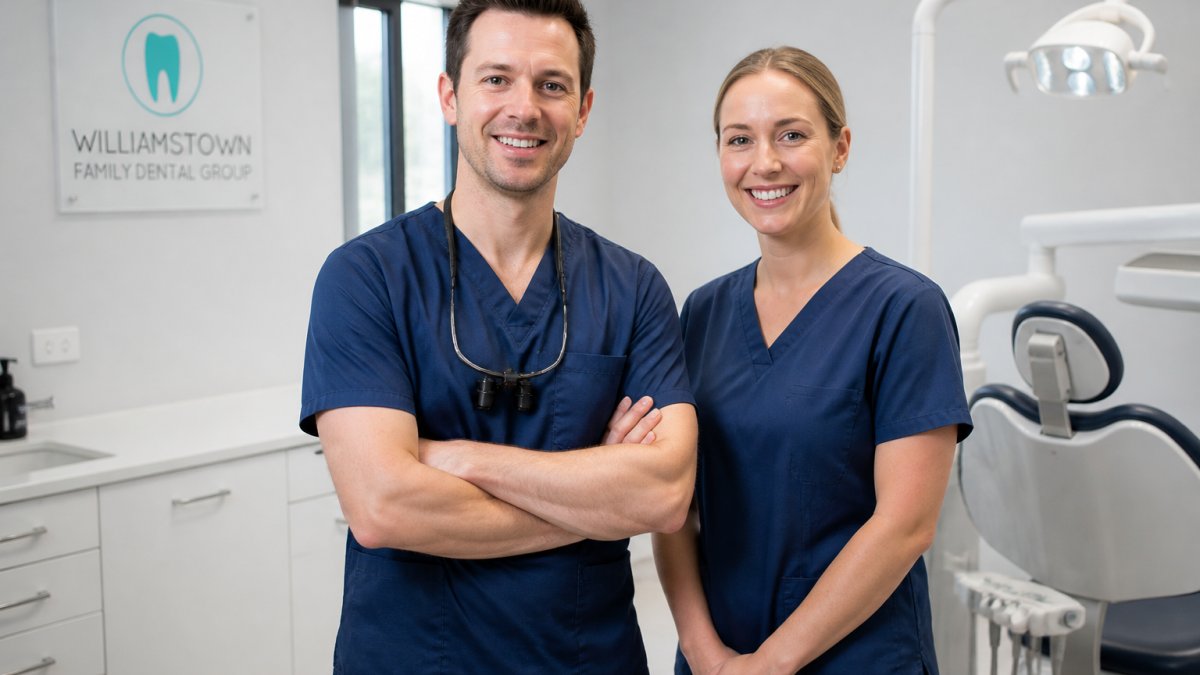
When you need a specialist referral, you can often book your appointment in the same practice. Your general dentist sits down with the specialist to discuss your case. They share X-rays and treatment plans. There's no confusion about who's doing what.
This approach also saves you time. You don't drive across town to see different providers. Your family's dental care stays coordinated and consistent. For busy professionals and families with young children, this convenience matters.
Multi-disciplinary practices also invest in advanced technology. Your general dentist has specialists on hand to discuss tricky cases in real time.
At Williamstown Family Dental Group, we provide comprehensive general and cosmetic dental care with access to experienced dental experts. Our preventive approach means fewer referrals and fewer unnecessary treatments. We focus on keeping your teeth healthy first, and treating problems only when they arise.
Understanding the Dental Referral Process
When your dentist recommends a referral, it's worth understanding what happens next. A referral isn't a handoff, it's a partnership between your two providers.
Your dentist will:
- Explain why they believe you need specialist care
- Provide you with a referral letter or form
- Share your X-rays and clinical notes with the specialist
- Discuss the specialist's findings and recommendations with you
You then:
- Contact the specialist's practice to book an appointment
- Attend your specialist appointment
- Return to your general dentist for follow-up care
The specialist may perform treatment and then send you back to your general dentist for ongoing maintenance. For example, an endodontist completes a root canal, and your general dentist places the final crown and monitors it over time.
This coordinated approach works best when all providers communicate clearly. Ask your dentist to explain why the referral is necessary. Ask the specialist how the treatment fits into your overall dental plan. Good dentists welcome these questions.
Finding a Dentist Who Offers Comprehensive Care
Not every practice offers the full range of treatments. Some focus only on prevention and basic restorations. Others specialise in cosmetic work. When you're looking for a long-term family dentist, it helps to know what you need.
Start by identifying your priorities:
- Do you need Saturday appointments for your work schedule?
- Do you want one dentist for your whole family, or are you comfortable with multiple providers?
- Are you interested in cosmetic treatments like veneers or teeth whitening?
- Do you have young children who need a gentle, experienced touch?
- Do you carry private health insurance and want a preferred provider?
Once you know what matters most, ask potential practices these questions:
- What treatments do you offer in-house?
- When do you refer to specialists, and which specialists do you work with?
- Can I book a family appointment time that suits my schedule?
- Are you a preferred provider for my health fund?
- What's your approach to preventive care versus treatment?
A practice that listens to your concerns and explains its philosophy clearly is worth choosing. You want a dentist who sees prevention as the priority and refers to specialists when needed, not one who tries to do everything or refers every complex case away.
| Consideration | What to Look For | Why It Matters |
|---|---|---|
| Experience | Dentist trained in multiple areas, decades of combined expertise | Broader skill set means fewer unnecessary referrals |
| Technology | Modern equipment, digital imaging, TGA-approved sterilisation | Better diagnostics and safer treatment |
| Availability | Saturday appointments, flexible scheduling | Fits your life, not the other way round |
| Insurance | Preferred provider status with major funds | Reduces out-of-pocket costs |
| Communication | Clear explanation of treatment options and costs | You make informed decisions |
| Philosophy | Preventive approach, ethical recommendations | Protects your teeth and your wallet |
Williamstown Family Dental Group has served families since 2003. We're a preferred provider for Medibank, Bupa, and HCF. We're open on Saturdays. We focus on prevention and offer two free check-ups, cleans, and fluoride treatments per year. Our team has decades of combined experience, and we use state-of-the-art German Melag B class autoclaves for sterilisation. We treat children, adults, and seniors in one warm, professional environment.
Can one dentist handle all treatments? The answer is nuanced. A skilled general dentist can manage the vast majority of routine dental care, from check-ups to cosmetic treatments. But some complex cases require specialist training and equipment. The best approach is finding a dentist who recognises their own limits and coordinates seamlessly with specialists when needed. At Williamstown Family Dental Group, we combine broad general expertise with access to specialist care, so your family gets the right treatment at the right time. Research on collaboration between general practitioners and specialists shows that coordinated care between general dentists and specialists leads to better patient outcomes. Book an appointment with us today and discover how comprehensive, ethical dental care should feel.
Frequently Asked Questions
What is the difference between a general dentist and a specialist?
A general dentist provides routine preventive care, fillings, cleanings, and basic restorative work for patients of all ages. Specialists complete additional training in specific areas such as orthodontics, periodontics, or implantology, allowing them to manage complex cases that fall outside general practice scope. Both are essential to comprehensive oral healthcare.
Can a general dentist perform implants and other complex procedures?
Some general dentists undertake additional training to place dental implants or perform other advanced restorative work. However, the extent of complex procedures varies by dentist and their qualifications. If your dentist lacks the expertise or equipment, they will refer you to a specialist. Always ask about your dentist's experience and qualifications before proceeding with complex treatment.
How does the dental referral process work in Australia?
When your general dentist identifies a condition requiring specialist care, they will provide a referral letter outlining your condition and treatment needs. You then contact the specialist's practice to book an appointment. Many health insurance funds recognise specialist referrals, which may affect your out-of-pocket costs. Check with your fund about coverage before attending your appointment.
Should I see one dentist for all my family's dental needs?
A comprehensive dental practice can manage most routine and preventive care for the entire family, from children's first check-ups to adult cosmetic work and senior denture care.