 how-to
Gentle Dentist for Nervous Children: A Parent's Guide
Table of Contents
- Why Children Feel Anxious About the Dentist
- Signs of Dental Anxiety in Children
- What Makes a Gentle Dentist for Nervous Children
- Questions to Ask When Finding a Gentle Dentist
- Preparing Your Child for Their First Dentist Visit
- Paediatric Dental Sedation Options for Anxious Children
- On the Day: Supporting Your Anxious Child
- Frequently Asked Questions
Last Updated: 28 September 2026
Why Children Feel Anxious About the Dentist
Most children feel nervous about dental visits. The unfamiliar environment, strange sounds, and unknown procedures trigger fear. Even children with no prior bad experiences often feel worried.
Common reasons include sensory overload. The bright lights, whirring tools, and metallic tastes feel overwhelming. Children also fear the unknown. They don't understand what the dentist will do, so their imagination fills in worst-case scenarios.
Past experiences matter too. One uncomfortable visit can create lasting anxiety. A child who felt rushed or scared may dread returning for years.
The good news: anxiety is manageable. A gentle dentist for nervous children understands these fears and works to ease them. At Williamstown Family Dental Group, we recognise that creating a calm environment makes all the difference for young patients.
Signs of Dental Anxiety in Children
Watch for these warning signs before a dental appointment:
- Complaining of stomach pain or headaches on appointment days
- Becoming withdrawn or unusually quiet
- Asking repeated questions about what will happen
- Showing physical signs like sweating, trembling, or tense shoulders
- Refusing to brush teeth or talk about dental care
- Having nightmares about dentists or hospitals
- Clinging to a parent or showing separation anxiety
Some children hide their fear. They stay silent but show tension in their body language. Others become defiant, refusing to cooperate at the appointment.
Anxiety can also build over time. A child who was fine at their first visit might become increasingly nervous with each subsequent appointment if they feel rushed or unheard.
Recognising these signs early lets you find a gentle dentist for nervous children before anxiety becomes severe. Early intervention prevents dental phobia from developing into a lifelong problem.
What Makes a Gentle Dentist for Nervous Children
A truly gentle dentist for nervous children combines clinical skill with genuine patience. They understand child development and know how anxiety affects young patients.
Child-friendly environment and communication style
The physical space sets the tone immediately. A child-friendly dental practice has:
- Bright, welcoming décor with age-appropriate colours and artwork
- Child-sized equipment that doesn't intimidate
- Toys, books, or entertainment in the waiting area
- Calm background music rather than clinical silence
- Staff who greet children by name and smile warmly
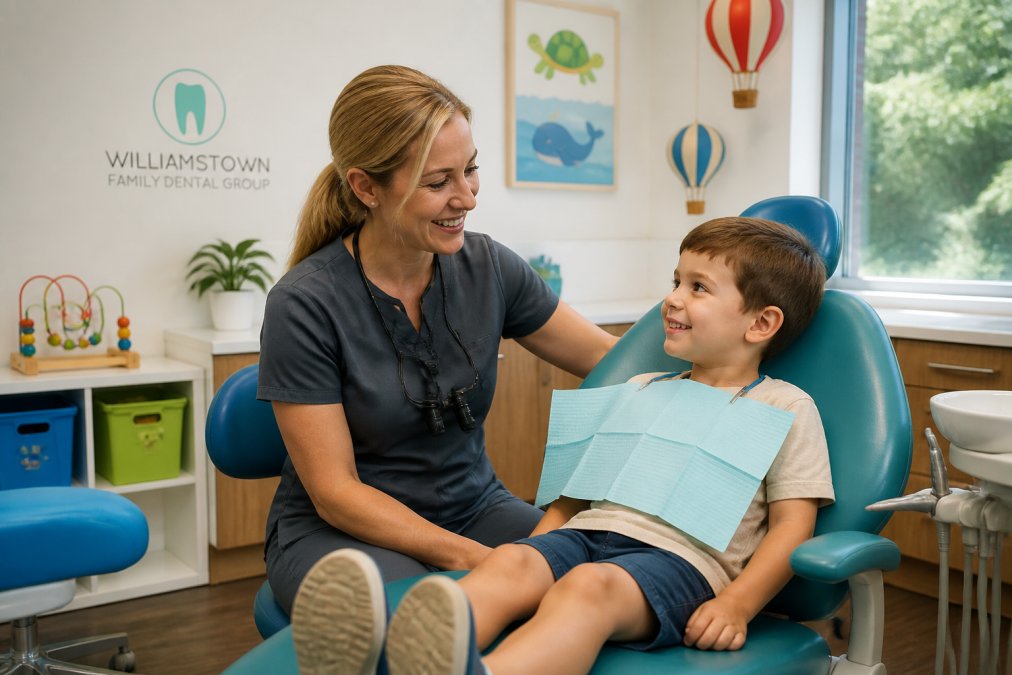
Communication style matters as much as the environment. A gentle dentist:
- Explains procedures in simple, age-appropriate language
- Uses positive words ("we'll clean your teeth" instead of "we'll scrape")
- Gives the child control where possible ("would you like to hold this mirror?")
- Answers questions honestly without unnecessary detail
- Avoids rushing or showing frustration
- Acknowledges feelings ("I know this feels strange, but you're doing great")
Experience with anxious young patients
Look for dentists who specialise in paediatric care or have extensive experience with nervous children. They've developed strategies that work. They know when to pause, when to reassure, and when to call a parent into the room.
An experienced dentist recognises the difference between normal nervousness and severe anxiety. They adjust their approach accordingly. Some children need more time. Others need distraction techniques. The best dentists tailor their method to each child.
Questions to Ask When Finding a Gentle Dentist
Before booking, ask these specific questions:
About experience:
- How many nervous or anxious children do you see each week?
- What training have you had in paediatric dentistry or anxiety management?
- How do you handle a child who becomes upset during treatment?
About the environment:
- Can I bring my child in for a visit before their first appointment?
- What does a typical first visit look like?
- Are parents allowed in the treatment room?
About communication:
- How do you explain procedures to children?
- What happens if my child needs to take a break?
- How do you help children feel in control?
About your practice:
- Do you offer flexible appointment times (like Saturdays)?
- Are you a preferred provider with major health funds?
- What's your approach to preventive care versus unnecessary treatment?
Williamstown Family Dental Group welcomes these questions. We're open on Saturdays for working families, and we're a preferred provider for Medibank, Bupa, and HCF. Our team has decades of combined experience with all ages, including nervous children.
Preparing Your Child for Their First Dentist Visit
What you do before the appointment shapes your child's experience. Preparation reduces fear and builds confidence.
Talk positively about dental visits
Your attitude sets the tone. Children pick up on parental anxiety, so stay calm and upbeat.
Use positive language:
- "The dentist helps keep your teeth strong and healthy"
- "You'll sit in a special chair and the dentist will count your teeth"
- "It's like a cleaning, it doesn't hurt"
Avoid scary words like pain, needle, or injection. Don't say "it won't hurt" because that plants the idea of pain. Instead, focus on what they'll experience: "You'll feel water and air on your teeth. It might tickle a bit."
Read children's books about dental visits. Many libraries stock picture books designed to familiarise young children with the experience. Normalise the visit through stories.
Visit the practice beforehand
If possible, bring your child to the practice before their first appointment. A quick tour removes the unknown element. They'll see:
- Where they'll sit
- What the chair looks like
- What instruments look like (without the pressure of an actual appointment)
- Where you'll be during the visit
This simple step dramatically reduces first-visit anxiety. Children feel less frightened when they've seen the space before.
Use simple language to explain what happens
Break down the appointment into simple steps. Use child-friendly terms:
- "The dentist will look in your mouth to see your teeth"
- "They'll use a small brush to clean your teeth"
- "There's a tiny tube that sucks water out so you don't have to swallow it"
- "You can raise your hand if you need a break"
Explain that the dentist and dental hygienist are helpers. They're there to keep teeth healthy. Let your child know you'll be nearby (or in the room, depending on the practice's policy).
Paediatric Dental Sedation Options for Anxious Children
For children with severe anxiety, sedation options exist. These are generally reserved for situations where anxiety prevents necessary treatment.
Nitrous oxide (laughing gas) is the most common option for children.
On the Day: Supporting Your Anxious Child
The appointment day requires calm, consistent support.
Before leaving home:
- Keep the morning routine normal
- Avoid talking excessively about the appointment
- Dress your child in comfortable clothes
- Arrive 10-15 minutes early so they're not rushed
At the practice:
- Stay calm and confident in your demeanour
- Let your child bring a comfort item (favourite toy or blanket)
- Sit where they can see you if allowed in the treatment room
- Use hand signals to communicate encouragement
- Avoid hovering or showing worry
During treatment:
- Let the dentist take the lead
- Don't distract with constant reassurance ("you're doing great!"), one or two calm comments are enough
- If your child signals distress, the dentist will pause
- Trust the process, most appointments go smoothly once they start
After the appointment:
- Praise specific brave behaviour ("you stayed still the whole time")
- Avoid rewards that reinforce fear ("you were so scared, so here's a treat")
- Talk about what went well
- Schedule the next appointment while you're there, consistency builds confidence
Finding a gentle dentist for nervous children transforms your child's relationship with dental care. The right practice makes all the difference. They combine a welcoming environment, skilled communication, and genuine patience to help anxious children feel safe and supported.
Frequently Asked Questions
How can I help my child overcome fear of the dentist?
Start by normalising dental visits through positive conversations at home. Avoid words like 'pain' or 'injection'; instead, use simple descriptions of what will happen. Visit the practice beforehand so your child becomes familiar with the environment. A gentle dentist for nervous children will use a calm tone, explain procedures clearly, and allow your child to ask questions. Some practices also use tell-show-do techniques, where the dentist explains, demonstrates on a model, then performs the procedure. Consistency and reassurance from you matter enormously—children pick up on parental anxiety, so staying calm helps them feel safer.
What should I look for in a child-friendly dental practice?
A truly child-friendly practice demonstrates several key qualities: staff who speak gently and use language children understand, a waiting area with age-appropriate entertainment, and a clinical environment that feels welcoming rather than clinical and intimidating. Ask whether the dentist has specific training or experience with anxious children. Check if they allow a parent in the surgery for reassurance, and whether they offer flexibility with appointment timing so your child isn't rushed. A practice that values preventive care and explains findings clearly to both parent and child is worth choosing.
At what age should my child have their first dental check-up?
The Australian Dental Association recommends that children have their first dental visit by age one, or within six months of their first tooth appearing. Early visits help your child become comfortable with the dental environment and allow the dentist to check for any early concerns. These first visits are usually brief, gentle, and focus on building confidence rather than extensive treatment. Starting young means your child grows up seeing dental care as routine and normal, which significantly reduces anxiety in later years.
Are there sedation options if my child's anxiety is severe?
Yes, several paediatric dental sedation options exist for children with significant anxiety. Nitrous oxide (laughing gas) combined with oxygen is commonly used—it's safe, reversible, and helps children relax whilst remaining conscious. For more complex procedures or severe anxiety, dentists may discuss other options with you, though these require careful assessment by a qualified paediatric dentist. Any sedation is only considered when behavioural techniques and a supportive environment haven't been sufficient. Always discuss your child's anxiety level honestly during your consultation so the dentist can recommend the most appropriate approach.