 blog
blog
Teeth Whitening for Sensitive Teeth: Safe Options
Table of Contents
- Why Teeth Whitening Causes Sensitivity
- Professional Teeth Whitening Cost and Benefits for Sensitive Teeth
- At-Home Whitening Kits: What Works for Sensitive Teeth
- Desensitising Toothpaste for Whitening: How It Helps
- How to Prevent Tooth Sensitivity After Whitening
- Managing Sensitivity During Your Whitening Treatment
- Is Professional Whitening Right for You?
- Frequently Asked Questions
Last Updated: September 21, 2026
Why Teeth Whitening Causes Sensitivity
Tooth sensitivity during teeth whitening for sensitive teeth happens because the bleaching agents used penetrate the outer layer of your tooth. This can irritate the nerve inside. The process temporarily opens microscopic channels in your enamel, exposing the softer dentine underneath.
If you already have sensitive teeth, whitening can make it worse. The bleaching gel reaches deeper into exposed areas. This triggers sharp pain when you eat, drink, or breathe cold air.
The good news? This sensitivity is usually temporary. It stops once your teeth adjust. But understanding why it happens helps you choose the right approach for your situation.
Professional Teeth Whitening Cost and Benefits for Sensitive Teeth
Professional whitening done at a dental practice offers several advantages for sensitive teeth. Your dentist can control the strength of the bleaching agent. They apply it carefully and monitor your comfort throughout.
Professional treatments work faster than at-home options. Most people see results in one to two hours. The dentist can also apply protective barriers to shield sensitive areas of your teeth.
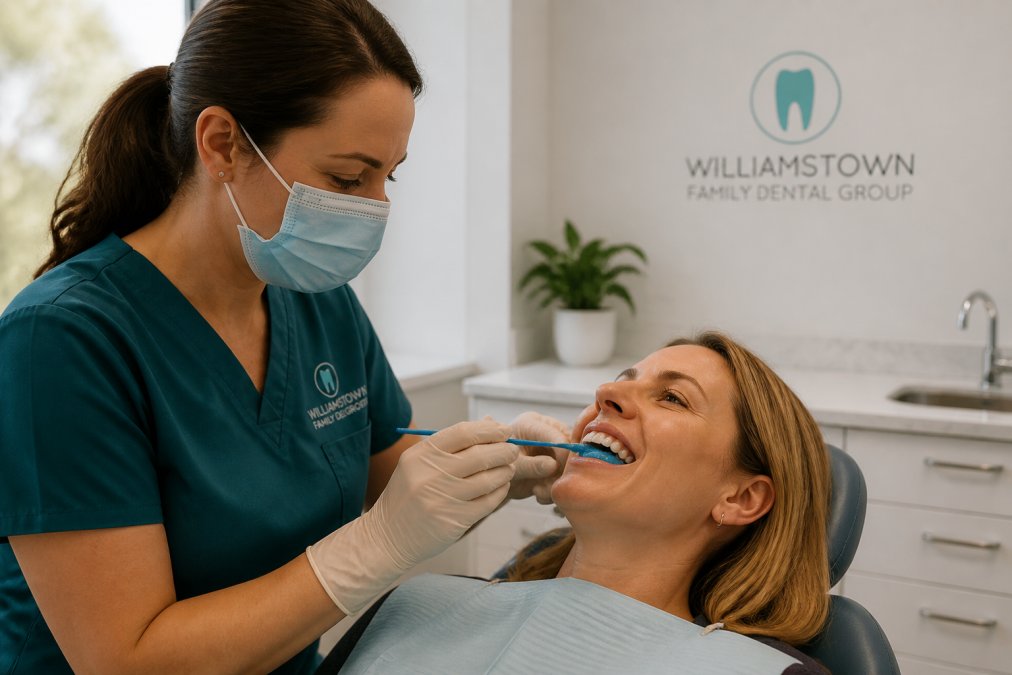
At Williamstown Family Dental Group, we tailor teeth whitening treatments for sensitive teeth to each patient's sensitivity level. We use techniques that minimise discomfort whilst delivering effective results. Our team can discuss your specific concerns during a consultation.
Key benefits of professional whitening:
- Faster results than at-home kits
- Dentist supervision throughout the process
- Custom protection for sensitive areas
- Ability to adjust strength if sensitivity occurs
- Professional assessment of your tooth health first
Professional whitening typically produces more dramatic results because dentists can use stronger formulations than over-the-counter products. However, the exact cost varies depending on the specific treatment method and your individual needs. Contact your dental practice for a personalised quote.
At-Home Whitening Kits: What Works for Sensitive Teeth
At-home whitening kits offer convenience and lower upfront cost. However, they require more caution if you have sensitive teeth. The bleaching trays or strips contain weaker formulations than professional treatments, but they work over longer periods.
Custom-made trays from your dentist fit your teeth perfectly. This reduces the chance of gel leaking onto your gums. Standard over-the-counter trays are less precise, which can increase sensitivity.
When using at-home kits with sensitive teeth, start slowly. Use the product for shorter periods than recommended. Many people with sensitivity find that every other day works better than daily use.
Tips for at-home whitening with sensitive teeth:
- Choose dentist-supplied trays over generic ones
- Shorten the treatment time initially
- Apply desensitising gel before whitening
- Use the kit less frequently (every other day)
- Stop immediately if sensitivity becomes painful
- Avoid whitening strips if you have receding gums
The advantage of at-home kits is that you control the pace. You can pause treatment if sensitivity flares up. This flexibility makes them suitable for people with mild to moderate sensitivity who are willing to take a gradual approach.
Desensitising Toothpaste for Whitening: How It Helps
Desensitising toothpaste works by blocking the channels in your dentine that lead to the nerve. It contains compounds like potassium nitrate or strontium chloride that create a protective barrier. When used before and after whitening, it can significantly reduce discomfort.
Start using desensitising toothpaste one to two weeks before you begin whitening. This builds up protection in advance. Continue using it after your treatment ends to manage any lingering sensitivity.
The effectiveness of desensitising toothpaste varies between individuals. Some people notice relief within a few days. Others need two to three weeks of consistent use. It works best when paired with other sensitivity-management strategies.
How to use desensitising toothpaste with whitening:
- Begin application 1-2 weeks before whitening
- Brush twice daily with the desensitising product
- Continue for several weeks after whitening
- Combine with fluoride rinses for extra protection
- Apply a small amount directly to sensitive areas if needed
Look for products that contain proven desensitising ingredients. Your dentist can recommend specific brands suited to your needs. Using desensitising toothpaste is one of the most straightforward ways to manage whitening-related sensitivity.
How to Prevent Tooth Sensitivity After Whitening
Prevention starts before you begin any whitening treatment. A dental check-up identifies existing sensitivity or weak spots in your enamel. Your dentist can address these issues first.
Avoid acidic foods and drinks immediately after whitening. Citrus, wine, and soft drinks soften your enamel temporarily. This makes sensitivity worse. Stick to neutral foods like chicken, rice, and water for at least 48 hours after treatment.
Don't brush your teeth aggressively after whitening. Use a soft-bristled toothbrush and gentle pressure. Vigorous brushing irritates already-sensitised teeth. Many people find that waiting a few hours before brushing helps.
Post-whitening care to prevent sensitivity:
- Avoid acidic foods and drinks for 48 hours
- Use a soft toothbrush with gentle technique
- Apply fluoride gel or rinse daily
- Avoid very hot or cold foods temporarily
- Don't use whitening strips more than recommended
- Wear a mouthguard if you grind your teeth at night
Fluoride treatments strengthen enamel and reduce sensitivity. Ask your dentist about professional fluoride applications after whitening. These provide deeper protection than fluoride toothpaste alone.
Managing Sensitivity During Your Whitening Treatment
If sensitivity develops during whitening, you have several options to manage it. The simplest approach is to reduce the frequency of treatment. Instead of whitening daily, try every other day or three times per week.
Shorten the duration of each whitening session. If your kit recommends 30 minutes, try 15 minutes instead. You'll still see results over time, but with less irritation. Some people find that splitting the treatment into two shorter sessions works better than one long session.
Apply a sensitivity-relief product before whitening. Many dentists recommend applying desensitising gel to your teeth 30 minutes before the whitening agent. This creates a protective layer that reduces nerve irritation.
If sensitivity becomes severe, stop whitening temporarily. Your teeth need time to recover. Resume treatment after a few days of using desensitising toothpaste and fluoride rinses. Your dentist can also apply a protective coating to exposed dentine before you continue.
Immediate steps if sensitivity occurs:
- Reduce treatment frequency (skip a day)
- Shorten each whitening session
- Apply desensitising gel beforehand
- Use fluoride rinses after treatment
- Take a break if pain is sharp or persistent
- Contact your dentist if sensitivity doesn't improve
Sensitivity during whitening is manageable. Most people find that adjusting their approach allows them to complete their whitening goals comfortably. Your dentist can guide you through modifications that work for your specific situation.
Is Professional Whitening Right for You?
Professional whitening is the best choice if you have significant sensitivity concerns. Your dentist assesses your tooth health and sensitivity level before starting. They can customise the treatment to suit your needs and monitor your comfort throughout.
Professional treatment is also ideal if you want faster results. One appointment often produces noticeable whitening. At-home kits typically require weeks of consistent use to achieve the same level of brightness.
If you have existing dental work like fillings or crowns, professional whitening helps your dentist ensure even results. Whitening agents don't work on artificial materials, so your dentist can position the gel carefully to avoid patchy results.
Consider professional whitening if you've tried at-home kits without success or if your sensitivity has made at-home treatment uncomfortable. The controlled environment and professional supervision often make the experience more effective and less painful.
At Williamstown Family Dental Group, we provide comprehensive whitening consultations. We discuss your sensitivity concerns, examine your teeth, and recommend the approach most likely to work for you. Our experienced team has decades of combined expertise in cosmetic dentistry. We focus on delivering results that are both effective and comfortable.
When professional whitening is the best choice:
- You have moderate to severe tooth sensitivity
- You want results in a single appointment
- You have dental work that needs careful handling
- At-home treatments haven't worked for you
- You prefer professional supervision and guidance
Teeth sensitivity shouldn't stop you from achieving a brighter smile. The right approach, whether professional treatment or carefully managed at-home whitening, makes all the difference. At Williamstown Family Dental Group, we specialise in whitening treatments tailored to sensitive teeth. Our team uses state-of-the-art techniques and protective protocols to minimise discomfort whilst delivering the results you want. Contact us to book a consultation and discuss which whitening option suits your needs best.
Frequently Asked Questions
Can I whiten my teeth if I have sensitive teeth?
Yes, you can whiten sensitive teeth with the right approach. Professional whitening treatments often work better for sensitive teeth because dentists can apply protective barriers and use lower-concentration bleach. At-home kits designed for sensitivity, combined with desensitising toothpaste, also offer safe options. The key is choosing a method suited to your sensitivity level and preparing your teeth beforehand with sensitivity treatments.
What is the safest teeth whitening method for sensitive teeth?
Professional whitening under dental supervision is generally safest for sensitive teeth. Your dentist can assess your tooth structure, apply protective coatings to exposed root surfaces, and control the bleaching agent's strength and contact time. They can also monitor your comfort throughout treatment. If you prefer at-home options, custom-fitted trays from your dentist are safer than over-the-counter strips because they minimise gel contact with gums and use lower concentrations.
How does desensitising toothpaste help with whitening?
Desensitising toothpaste works by blocking pathways to the tooth's nerve, reducing pain signals during and after whitening. Using it for 2-4 weeks before whitening treatment strengthens your teeth's defences. Many dentists recommend continuing desensitising toothpaste during and after whitening to manage discomfort. Look for products containing potassium nitrate or strontium compounds, and apply them as directed by your dentist for best results.
How long does tooth sensitivity last after whitening?
Sensitivity after whitening typically lasts a few days to two weeks, depending on your teeth's condition and the whitening method used. Professional treatments often cause less prolonged sensitivity than at-home kits. Using desensitising toothpaste, avoiding acidic foods and drinks, and following your dentist's post-treatment care instructions can shorten the sensitive period. If sensitivity persists beyond two weeks, contact your dentist to rule out other issues.