 blog
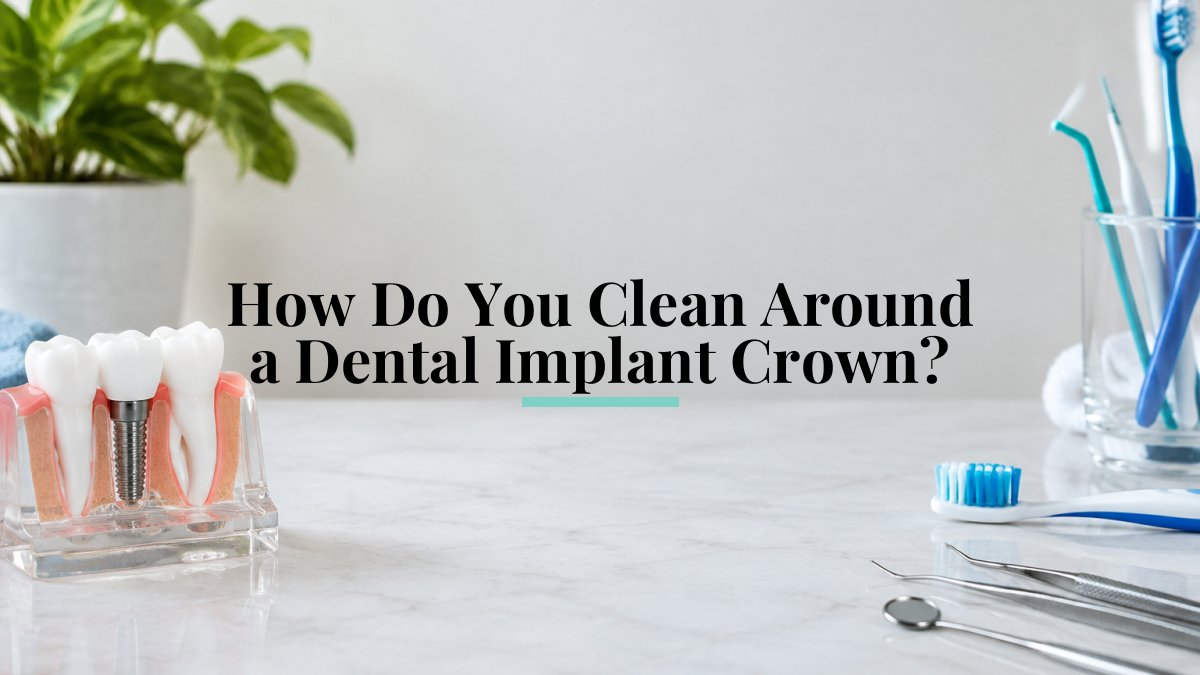
How Do You Clean Around a Dental Implant Crown?
Last Updated: November 5, 2026
Quick Summary
Clean around a dental implant crown by brushing twice daily with a soft-bristled brush angled at 45 degrees at the gumline, then cleaning between the crown and each neighbouring tooth with an interdental brush or implant floss. Finish with a water flosser on the lowest setting and an antimicrobial rinse, using it last after plaque is removed.
- Brush for about two minutes with a soft-bristled brush and fluoride toothpaste, keeping pressure light.
- Replace your brush head every three months and check tools weekly for worn bristles or frayed floss.
- Slide interdental brushes in gently at gum level and never force an oversized brush through the gap.
- Start a water flosser on the lowest pressure setting, as higher settings do not clean better.
- Persistent bleeding, pain, swelling or a bad taste that does not settle needs a dental check-up.
Table of Contents
- Why Cleaning Around a Dental Implant Crown Matters
- 1. Brush Twice Daily with a Soft-Bristled Toothbrush
- 2. Angle Your Brush to Clean the Crown and Gumline
- 3. Choose the Right Dental Implant Cleaning Tools
- 4. How to Floss Around Dental Implants Safely
- 5. Use a Water Flosser for Hard-to-Reach Areas
- 6. Build a Daily Dental Implant Cleaning Routine
- 7. Rinse with an Antimicrobial Mouthwash
- When to Seek Professional Advice
- Frequently Asked Questions
Why Cleaning Around a Dental Implant Crown Matters
Cleaning around a dental implant crown is the daily work that keeps the implant and the bone around it healthy.
Plaque and food debris collect where the crown meets the gumline.
A review in Implant Maintenance: A Clinical Update notes that a range of flosses, interdental cleaners and water-irrigation systems are available and safe to use around implants.
If you want to understand what goes wrong when cleaning slips, our article on dental implant failure covers the common causes. For patients starting out, dental implants in Williamstown explains what the treatment involves and what aftercare looks like.
Below are seven ways to clean around a dental implant crown, with the technique that makes each one work.
1. Brush Twice Daily with a Soft-Bristled Toothbrush
Brushing twice a day is the base of every implant cleaning routine. Use a soft-bristled toothbrush and a fluoride toothpaste, and brush for about two minutes.
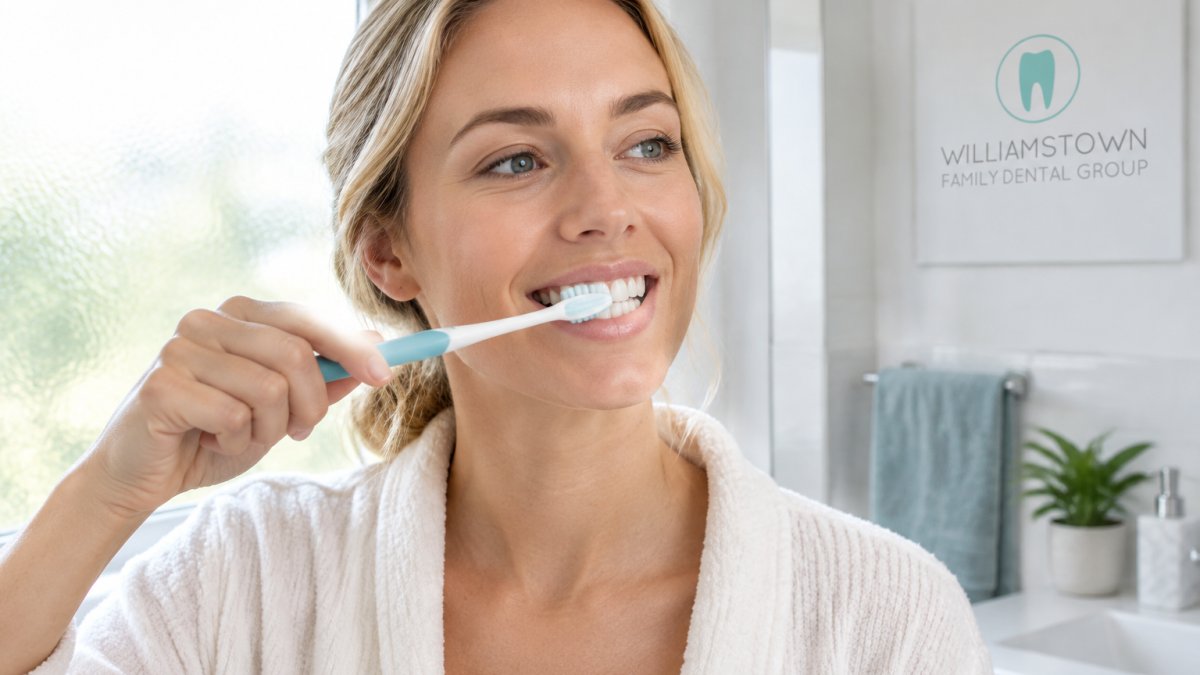
A common mistake is reaching for a medium or hard brush. Firmer bristles feel like they clean better.
Keep the pressure light. Let the bristle tips do the work rather than pressing hard against the gumline.
Manual vs Electric: Which Brush Suits an Implant Crown?
Both work. A manual toothbrush gives you direct control over pressure, which suits people with sensitive gums. An electric toothbrush does the motion for you, and many have a pressure sensor that warns you when you push too hard.
If you have limited hand movement or find small circles hard to maintain, an electric brush with a small round head is often easier. Whichever you pick, choose a soft head and replace it every three months.
2. Angle Your Brush to Clean the Crown and Gumline
Angle the brush at roughly 45 degrees so the bristles meet both the crown and the gumline.
Work in small circles along the join between crown and gum. Spend a few extra seconds on the cheek side and the tongue side, where access is tighter.
- Brush the gumline first, before the chewing surface
- Use small circles, not back-and-forth scrubbing
- Cover every surface: front, back, top and the gum margin
An angled toothbrush with a compact head reaches the back molars more easily. If your implant sits at the back of the mouth, that shape matters more than the brand.
3. Choose the Right Dental Implant Cleaning Tools
The right dental implant cleaning tools depend on the crown design and how much space you have around it. There is no single best tool, only the one that fits your mouth.
A review summary in Today's RDH on implant maintenance notes that one study recommends interdental brushes rather than traditional floss for daily implant home care. That does not settle the question for everyone, but it shows that brushes are worth considering first.
Here is how the main tools compare:
| Tool | Best for | Watch out for |
|---|---|---|
| Soft manual brush | Sensitive gums, controlled pressure | Needs careful technique |
| Electric brush | Limited hand movement, pressure sensors | Avoid hard heads |
| Interdental brush | Gaps beside the crown | Wrong size can scratch |
| Implant floss | Tight contacts | Threading takes practice |
| Water flosser | Braces, bridges, hard-to-reach areas | Messy until you learn the angle |
| Antimicrobial rinse | Added protection | Not a substitute for cleaning |
Interdental Brushes: Sizing and Safe Use
Interdental brush size should match the gap, not be forced through it. Ask your dentist or hygienist to check the fit at your next visit, then buy that size.
Slide the brush in gently at gum level. Never jam it in sideways, and never twist it hard against the crown. If it will not pass without pressure, the size is wrong.
4. How to Floss Around Dental Implants Safely
Knowing how to floss around dental implants safely comes down to one rule: never snap floss down onto the gum. Guide it in gently and clean the sides of the crown.
Standard floss can work, but implant floss, which has a thicker, spongier section, is often easier to control and less likely to cut the gum if it slips. A floss threader helps when the contact between the crown and the neighbouring tooth is tight.
Step-by-Step Flossing Technique
- Thread the floss gently between the crown and the neighbouring tooth. Do not force it through a tight contact.
- Wrap the floss in a C shape around the side of the crown, not just the tooth side.
- Slide it up and down two or three times against the crown surface, keeping the floss flat against the side rather than sawing back and forth.
- Lift the floss out sideways rather than snapping it upward through the contact.
A common pattern is for people to snap floss up through a contact because it feels quicker. That motion can tug the gum margin and cause irritation around the implant collar. If you feel a sharp pull, stop and reset the floss before continuing.
Flossing Around Different Crown Designs
A single implant crown usually has two contact points, one with each neighbouring tooth, and both need cleaning. An implant bridge has more complex access: you may need to clean under the pontic (the false tooth) as well as around each supporting crown. In that case, implant floss or an interdental brush that fits the gap under the bridge is often more practical than standard floss.
Watch out: if the gap beside your crown is too tight for floss to pass without force, do not persist. Ask your dentist whether an interdental brush in a smaller size or a different floss type would suit your crown better.
If your implant sits at the back of the mouth where access is limited, a floss threader or a water flosser on a low setting may be a more realistic daily option.
5. Use a Water Flosser for Hard-to-Reach Areas
A water flosser, also called an oral irrigator, pushes a thin stream of water along the gumline. It suits people with bridges, tight contacts or limited dexterity.
Start on the lowest pressure setting. Aim the stream at the gumline at a slight angle and move slowly along the crown.
Water flossers do not replace brushing or interdental cleaning. Many people use one in the evening and brush as usual.
6. Build a Daily Dental Implant Cleaning Routine
A daily dental implant cleaning routine works best when it is short, repeatable and follows a fixed order. The sequence below covers every surface around the crown without adding time.
The Seven-Step Daily Sequence
- Brush the gumline first. Angle a soft-bristled brush at roughly 45 degrees so the bristles meet both the crown and the gum. Use small circles, not back-and-forth scrubbing.
- Brush the chewing surface and the back of the crown. Cover front, back, top and the gum margin before moving on.
- Clean between the crown and each neighbouring tooth. Use an interdental brush sized to the gap, or implant floss if the contact is tight. Slide it in gently at gum level, never force an oversized brush through.
- Clean under any bridge or pontic. If your implant supports a bridge, use implant floss or a small interdental brush that fits under the false tooth.
- Use a water flosser on hard-to-reach areas. Start on the lowest pressure setting and aim the stream at the gumline at a slight angle. Higher settings do not clean better.
- Rinse with an antimicrobial mouthwash. Use it last, after plaque and food debris have been removed. Choose an alcohol-free rinse if your gums feel dry or sensitive.
- Check your tools. Once a week, look for worn bristles or frayed floss and replace anything that no longer cleans effectively.
Morning: steps 1-3 are usually enough to start the day. Evening: run the full sequence, including steps 4-6 where they apply to your crown design.
What to Do When Cleaning Causes Symptoms
Bleeding when you clean around the crown is common in the first few days after fitting, but persistent bleeding, pain, swelling or a bad taste that does not settle are signs that need a professional look. Our article on signs you need a dental checkup explains the warning signs in more detail.
Watch out: if you find yourself avoiding one side of the crown because it feels tender, that is a signal to have the area assessed, not to skip it. Plaque left in a tender spot will make the inflammation worse.
Professional Care and Recall Intervals
Recall intervals depend on your individual risk and the condition of the implant, not on a universal schedule. Some patients are seen every six months; others with a history of peri-implantitis or higher plaque levels may be advised to attend more often. Our preventive care service covers routine check-ups, scaling and oral hygiene advice, and your dentist will set an interval that suits your implant.
7. Rinse with an Antimicrobial Mouthwash
An antimicrobial rinse adds a layer of protection after cleaning, but it does not replace brushing or interdental work.
Choose an alcohol-free rinse if your gums feel dry or sensitive. Follow the label directions and do not swallow it.
Some rinses are designed for short-term use after treatment. Ask your dentist which type suits your implant and how long to use it.
When to Seek Professional Advice
Bleeding gums, pain or a persistent bad taste around an implant are signs of complications that need a professional look.
Our article on signs you need a dental checkup explains the warning signs in more detail. Contact us if you notice:
- Bleeding when you clean around the crown
- Pain or tenderness over the implant
- A bad taste that does not settle
These symptoms do not always mean the implant is failing. They do mean a dentist should assess it.
Cleaning around a dental implant crown takes a few extra minutes a day, and that time helps protect the implant and the bone around it.
Frequently Asked Questions
How often should you clean around a dental implant crown?
Clean around your dental implant crown at least twice a day, just as you would your natural teeth. A consistent daily dental implant cleaning routine, including brushing, interdental cleaning and rinsing, helps remove plaque and food debris before bacterial build-up can irritate the surrounding gums. If you wear a night guard or have limited dexterity, your dentist may suggest extra tools or a modified schedule. Regular professional check-ups and cleans are also part of keeping the implant healthy long term.
Can you use an electric toothbrush on a dental implant crown?
An electric toothbrush with a soft-bristled head can be used on a dental implant crown when used with gentle pressure and a non-abrasive toothpaste; check the choice with your dentist. Some people find an electric brush easier for reaching the gumline, while others prefer a manual brush with a small, angled head. Whichever you choose, focus on the junction where the crown meets the gum, as this is where plaque tends to collect. Ask your dentist which brush suits your crown design and access.
What are the signs of infection around a dental implant?
Watch for bleeding gums when cleaning, gum inflammation that does not settle, tenderness, a persistent bad taste, or any looseness of the crown. These can be early signs of peri-implantitis, a condition where bacterial build-up inflames the tissues around an implant. If you notice any of these, book a dental appointment rather than waiting. Early professional assessment gives the best chance of managing the issue and protecting the implant.
Which tools help clean around a dental implant crown?
A soft-bristled manual or electric toothbrush, interdental brushes sized to your gaps, implant-specific floss or tape, a water flosser, and an antimicrobial mouthwash all play a role. Your dental implant cleaning tools should match your crown design and the space between the crown and neighbouring teeth. Avoid abrasive toothpastes and hard bristles, which can scratch the crown surface. A dentist or hygienist can show you the correct technique for each tool.