 blog
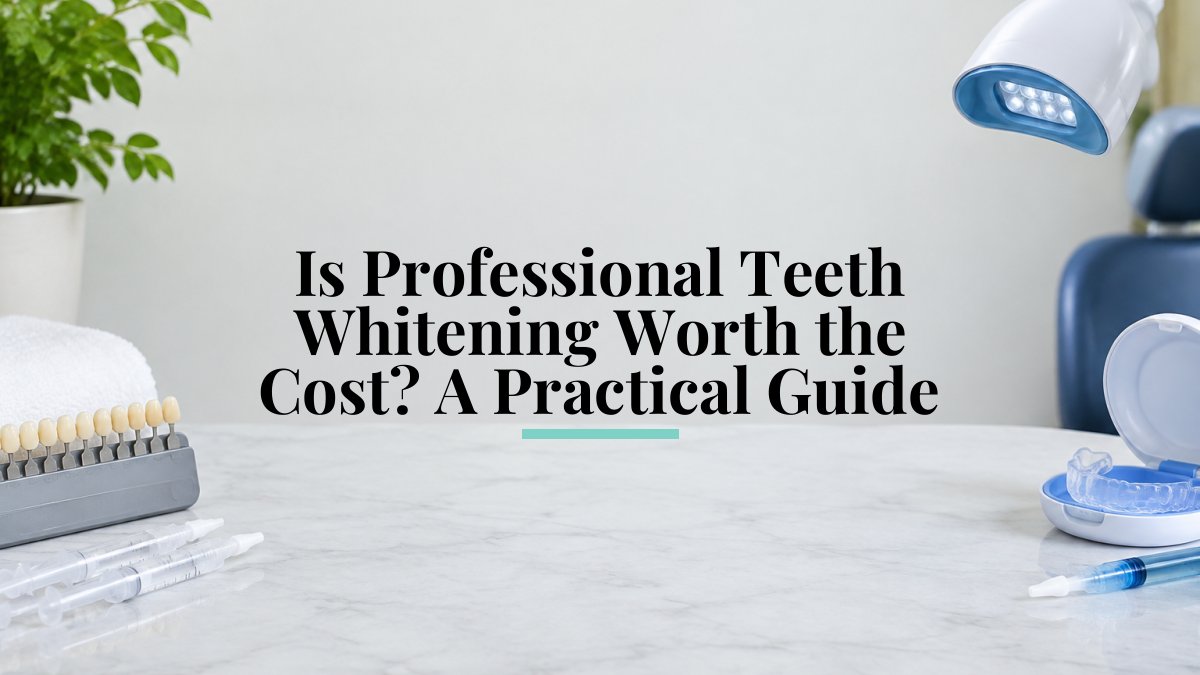
Is Professional Teeth Whitening Worth the Cost? A Practical Guide
Last Updated: 8 November 2026
Quick Summary
Professional teeth whitening is worth the cost when your discolouration is from surface stains and you want a dentist-supervised result with a suitability check. Compare the full course cost per shade change rather than the headline price, because cheap kits that need repeating can cost more over time.
- In-chair whitening gives the fastest visible change, while take-home custom trays work gradually over weeks.
- Over-the-counter kits involve no supervision and no suitability check, unlike dentist-led treatment.
- Results are not permanent; coffee, tea, red wine and smoking speed the return of stains.
- Sensitive teeth may suit a lower-strength agent or a slower take-home course.
- Skip whitening if you have untreated decay, gum disease or worn enamel until a check-up.
Table of Contents
- Weighing Up Whether Professional Teeth Whitening Is Worth the Cost
- Understanding Professional Teeth Whitening Cost
- In-Chair Teeth Whitening vs Take-Home: Which Delivers More Value
- Professional Whitening Compared With Over-the-Counter Kits
- How Long Does Professional Teeth Whitening Last?
- Teeth Whitening for Sensitive Teeth: What to Expect
- Stains Whitening Cannot Fix and When to Skip It
- Book a Whitening Consultation to Get an Honest Assessment
- Frequently Asked Questions
Weighing Up Whether Professional Teeth Whitening Is Worth the Cost
Professional teeth whitening is a dentist-supervised treatment that uses a bleaching agent to lighten the colour of natural teeth, and whether it is worth the cost depends on your goals, your budget and how your teeth respond. Below, we break down what you actually pay for, how results compare, and when whitening simply will not deliver what you hope.
Whether whitening is worth it depends on the type of stain, sensitivity and how much maintenance you are prepared to do.
Understanding Professional Teeth Whitening Cost
Cost is the sticking point for most people, so it helps to understand what drives the price before comparing options. Professional teeth whitening cost typically reflects three things: the strength of the bleaching agent, the level of dentist supervision, and whether custom-fitted trays are included.
In-chair whitening usually commands the highest fee because it happens in a single appointment under direct supervision. Take-home whitening with custom trays generally sits in the middle. Over-the-counter kits are the cheapest upfront but often need repeating, which changes the value calculation.
To make a like-for-like comparison, price the whole pathway rather than the headline treatment. A typical in-chair course involves a consultation and suitability check, the in-chair session itself, and often a take-home top-up kit to maintain the result. Dentist-supervised take-home treatment usually includes the consultation, impressions and custom trays, plus the bleaching gel and a review appointment. Retail kits carry the shelf price plus the cost of repeat purchases when results fade, and potentially a dental visit if irritation or uneven results occur.
Fees vary by practice, treatment type and the condition of your teeth, so ask for a written quote that itemises the consultation, the whitening itself and any maintenance products.
A more useful measure than headline price is cost per shade change and cost over time. Divide the total course cost by the number of shades gained to compare value between options, then factor in how long the result lasts and what touch-ups cost. A cheaper kit that needs repeating every few months can cost more over a year than a supervised course that holds its shade longer.
We do not quote fixed prices here because fees vary by practice, treatment type and the condition of your teeth. For a clear picture of what you are likely to pay, ask for a written quote at a consultation. If you want to understand how dental fees sit alongside other out-of-pocket costs, our guide to understanding out-of-pocket dental costs is a useful starting point.
In-Chair Teeth Whitening vs Take-Home: Which Delivers More Value
In-chair whitening delivers the fastest visible change in a single visit, while take-home whitening trades speed for gradual, often more controlled results over several weeks. Neither is universally better; the right choice depends on your timeline, your sensitivity and how much supervision you want.
In-chair whitening suits people with an event or deadline, or those who want the process managed entirely by a clinician. The bleaching agent is stronger, and results appear within one appointment.
Take-home whitening with custom-fitted trays gives you more control over the pace. You wear the trays at home over a set period, which some patients prefer because it lets them pause if sensitivity builds.
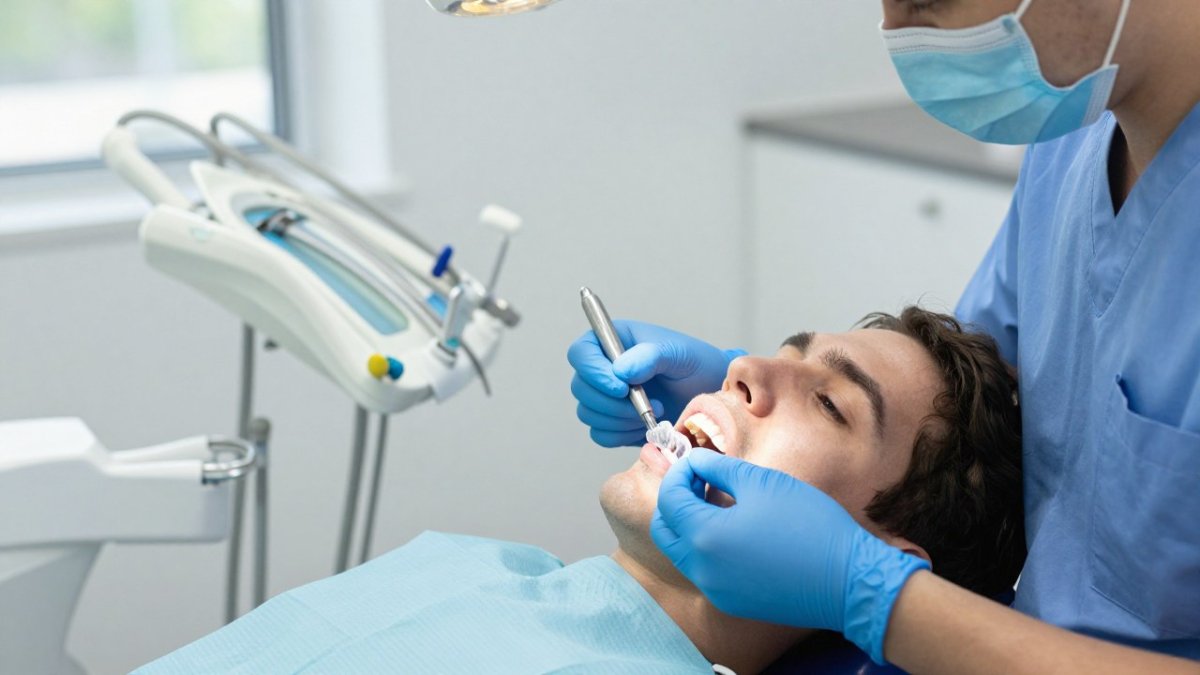
A common mistake is assuming stronger always means better.
Professional Whitening Compared With Over-the-Counter Kits
Over-the-counter whitening products are convenient and low-cost, but they do not involve the same clinician supervision as a dentist-led treatment.
Professional whitening generally begins with a clinical assessment. A clinician checks your teeth and gums and identifies the type of discolouration before advising on a suitable approach.
| Feature | In-chair whitening | Take-home (custom trays) | Over-the-counter kits |
|---|---|---|---|
| Supervision | Clinician-led in one visit | Dentist-prescribed, used at home | None |
| Speed of results | Fastest | Gradual over weeks | Variable |
| Fit and coverage | Controlled by clinician | Custom-fitted to your teeth | One-size-fits-all |
| Suitability check | Yes | Yes | No |
| Best for | Deadlines, even results | Sensitivity-prone teeth | Minor surface stains |
The cheapest kit can cost more over time if it needs repeating or causes irritation that requires a dental visit.
How Long Does Professional Teeth Whitening Last?
Professional teeth whitening results vary in how long they last, depending on your diet, smoking status and oral hygiene.
How long does professional teeth whitening last in your case? It hinges on daily habits. Coffee, tea, red wine and smoking all speed the return of stains. Good brushing, regular cleans and occasional touch-up treatment help hold the result.
A realistic expectation matters here. No whitening is permanent, and anyone promising otherwise is overselling. Think of it as maintenance rather than a one-off fix.
Teeth Whitening for Sensitive Teeth: What to Expect
Teeth whitening for sensitive teeth is possible, but it needs a more careful approach and honest expectations about discomfort. Sensitivity during and after whitening can occur and is often temporary.
If your teeth are prone to sensitivity, a clinician may discuss options such as a lower-strength agent, a take-home course paced over a longer period, or a desensitising product.
Using a high-strength product without professional guidance may worsen discomfort if you already have sensitive teeth or exposed gums. If you want a deeper look at safe options, read our guide to teeth whitening for sensitive teeth.
Stains Whitening Cannot Fix and When to Skip It
Not all discolouration responds to whitening, and knowing the difference saves you money. Whitening generally works on extrinsic stains, the surface discolouration from food, drink and smoking, and tends to have less effect on intrinsic stains, which sit inside the tooth.
The mechanism matters. Whitening generally works more readily on surface stains than on intrinsic stains, which sit deeper within the tooth and may respond less predictably.
Whitening also cannot change the colour of crowns, veneers, fillings or dentures. If those are visible when you smile, whitening the surrounding teeth can leave them looking mismatched, so a clinician may discuss other options first. Whitening does not change the colour of crowns, veneers, fillings or dentures, so visible restorations may need to be considered when planning treatment.
You should also skip whitening, at least for now, if you have untreated decay, gum disease or worn enamel. Whitening over these problems can cause pain and does not address the underlying issue. A check-up establishes whether you are a suitable candidate before any money is spent.
Watch out: if your goal is to fix a single dark tooth or a band of discolouration, whitening alone may not deliver an even result, and a clinician may recommend a different approach such as a restoration or a targeted treatment plan.
Book a Whitening Consultation to Get an Honest Assessment
The most reliable way to know whether whitening is worth it for you is a proper assessment, not a guess based on price lists. A consultation lets a clinician check your teeth and gums, identify your stain type and tell you plainly whether whitening will help.
Williamstown Family Dental Group takes a preventive, ethical approach. Our team has decades of combined experience, and we are a preferred provider for Medibank, Bupa and HCF. We are also open on Saturdays.
If you are weighing up safety before committing, our guide on whether teeth whitening is safe for everyone answers the common questions. And if you want to recognise honest advice when you hear it, read how to identify honest dental recommendations. When you are ready, you can book a whitening consultation and get a clear, no-pressure assessment.
Deciding whether whitening is worth the cost comes down to your teeth, your goals and honest guidance. Williamstown Family Dental Group offers dentist-supervised in-chair and take-home whitening, a preventive approach that avoids unnecessary treatment, and Saturday appointments for busy families. Get started with Williamstown Family Dental Group and make your whitening decision with a clear assessment rather than a guess.
Frequently Asked Questions
Is professional teeth whitening worth the cost?
It depends on the cause of your discolouration and what you expect. Professional teeth whitening uses dentist-supervised gels and custom-fitted trays or in-chair treatment. If your stains are surface-level and your teeth and gums are healthy, the outcome can justify the spend. If discolouration is intrinsic, caused by tetracycline or fluorosis, or you have untreated decay, whitening may deliver little. A consultation is the only way to know.
How much does professional teeth whitening cost?
Pricing depends on the type of treatment, how many appointments are needed and your individual assessment, so practices quote case by case. In-chair whitening and take-home custom tray kits are priced differently, and top-up gels add ongoing cost. Rather than compare headline figures across providers, ask for a written quote that covers the initial consultation, the whitening itself and any follow-up. Contact the practice directly for current fees.
How long do professional teeth whitening results last?
How long results last varies with your diet, smoking status and oral hygiene. Coffee, tea, red wine and tobacco darken teeth faster. Good aftercare, including regular cleans and limiting staining drinks, stretches the result further. Your dentist can advise a realistic maintenance schedule at your consultation.
Can professional teeth whitening cause sensitivity?
Temporary tooth sensitivity and mild gum irritation are the most commonly reported side effects, particularly with higher-strength gels. If you already have sensitive teeth, your dentist may recommend a lower-concentration gel, a desensitising product before and after treatment, or a take-home approach that lets you control the pace. Tell your dentist about sensitivity early so the plan can be adjusted rather than abandoned.