 How-to
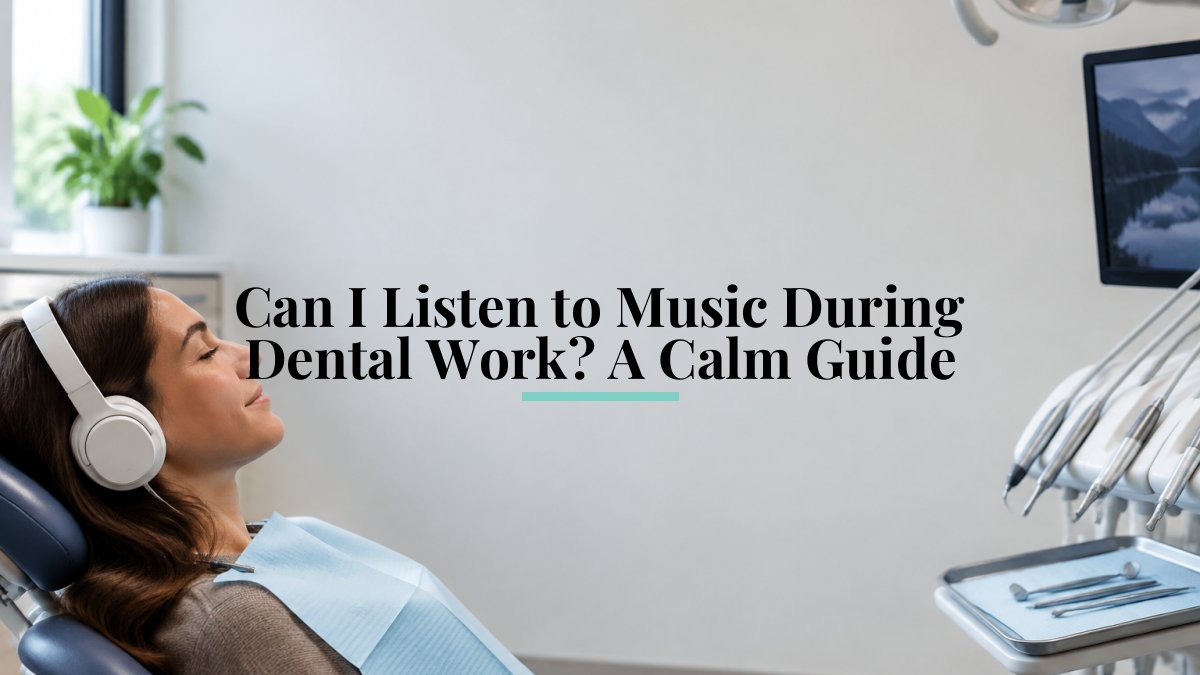
Can I Listen to Music During Dental Work? A Calm Guide
Last Updated: November 24, 2026
Quick Summary
Many practices allow you to listen to music during dental work, but you should always check first. Short check-ups and cleanings rarely cause any issue, while longer treatments may need a different setup. Headphones work best when you and your dental team agree on a simple signal system first.
- Most dental practices allow headphones, but policies vary, so check before your appointment.
- Music can help with dental anxiety by masking the drill and giving you a steady focus.
- Bring your own headphones, a charged device and audio downloaded for offline play.
- Agree a physical stop signal, such as raising your left hand, before treatment starts.
- Ask whether headphones are permitted for your specific procedure when you book.
Table of Contents
- Can I listen to music during dental work?
- Wearing headphones at the dentist: what practices allow
- How music for dental anxiety helps during treatment
- Podcasts at the dentist: spoken audio as a distraction
- What to bring to a dental appointment when you want audio
- Safety and communication checklist for headphone wear
- Procedure-specific advice: fillings, extractions and check-ups
- Booking a calmer visit with your dental team
- Frequently Asked Questions
Can I listen to music during dental work?
Many practices allow you to listen to music during dental work, but you should always check first. Music is a simple, low-risk comfort tool that many patients find helpful.
The practical answer depends on the procedure and the practice. Short check-ups and cleanings rarely cause any issue. Longer treatments, or anything where your dentist needs to talk you through instructions mid-appointment, may need a different setup.
Audio is one of the easiest things you can bring to make a visit feel more manageable. Below, we explain what practices generally allow, how music can help with dental anxiety, and what to pack.
One thing most guides get wrong: headphones are not a substitute for communication. They work best when you and your dental team agree on a simple signal system first.
Wearing headphones at the dentist: what practices allow
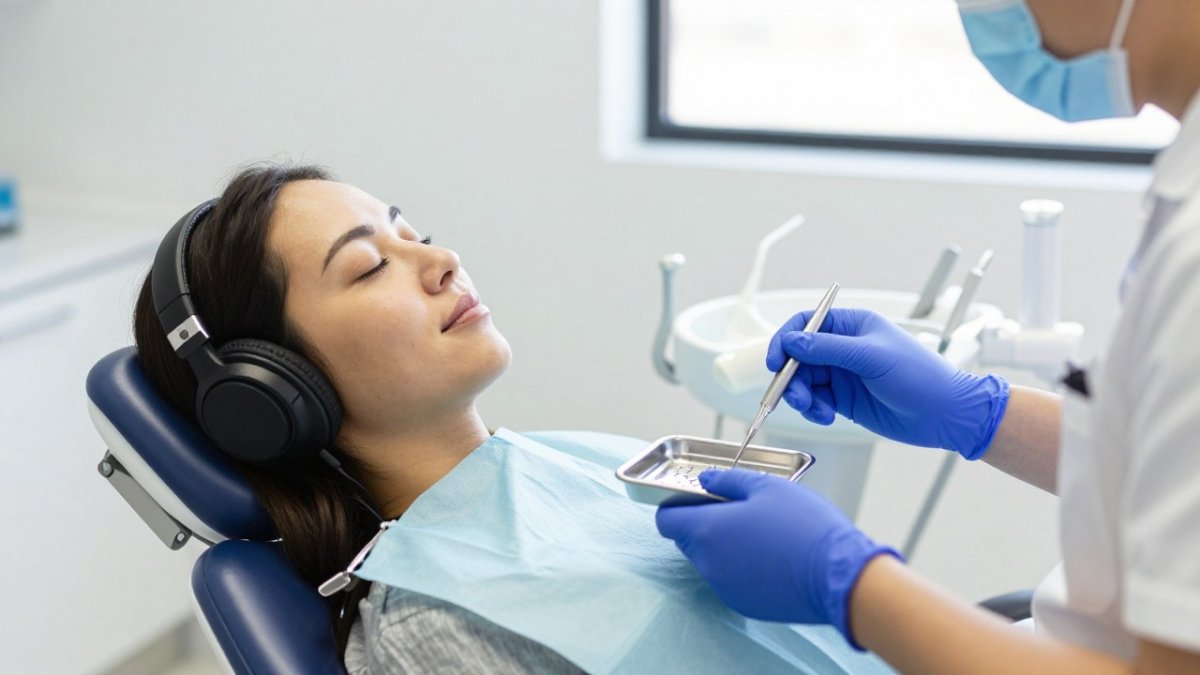
Most dental practices allow headphones, but policies vary, so check before your appointment. Some practices ask you to keep one ear free. Others are fine with both ears covered during routine work.
The woman is Australian.
What to expect in practice:
- Routine check-ups and cleanings: headphones are usually fine throughout.
- Fillings and longer restorative work: often fine, but your dentist may ask you to remove them briefly.
- Extractions and surgical procedures: practices may prefer you to stay fully attentive.
If headphones alone will not settle your nerves, it is worth asking whether sedation dentistry is a safe option for you and what the practice offers.
How music for dental anxiety helps during treatment
Music can help with dental anxiety by redirecting attention away from treatment sounds and giving you something steady to focus on.
The mechanism is straightforward. The dental drill is one of the most commonly cited triggers for anxious patients. Music masks it. A calming playlist also gives you a predictable rhythm to breathe along with.
For a deeper set of practical techniques, our guide on how to manage dental anxiety covers breathing, planning and what to say to your dental team.
Podcasts at the dentist: spoken audio as a distraction
Podcasts work well as a distraction technique, and some patients prefer them to music. Spoken audio occupies your attention more actively than background music, which can be useful if your mind tends to race.
Audiobooks suit longer appointments. A gripping chapter can carry you through a 45-minute filling far better than a playlist you have heard a hundred times.
- Podcasts: best for routine visits and check-ups
- Audiobooks: best for longer restorative appointments
- Calming sounds: rain, white noise or nature audio for patients who find voices distracting
- Music: the most studied option, and the easiest to set up
Volume matters. Keep it loud enough to mask the drill but low enough to hear a raised voice. If your dentist needs your attention, they will tap your shoulder or use your agreed signal.
What to bring to a dental appointment when you want audio
Bring your own headphones, a charged device and your audio already downloaded, so you are not relying on clinic Wi-Fi during your appointment.
Our checklist for what to bring to a dental appointment:
- Over-ear headphones or noise-cancelling headphones
- Earbuds as a backup if over-ear feels bulky in the chair
- Phone or player, fully charged
- Audio downloaded for offline play
- A calming playlist or podcast episode queued and ready
- A spare cable if your headphones are wired
- A note of any signal you have agreed on with the dental team
Noise-cancelling headphones are worth considering if treatment sounds are your main trigger. They reduce the drill and suction noise even before your audio starts.
One practical point: over-ear headphones can interfere with some dental equipment and the position of the chair headrest. Mention your headphones when you book so the team can plan around them.
Safety and communication checklist for headphone wear
Communication is the part most patients overlook. Agree on a stop signal before treatment starts, and confirm your dentist will use it.
A simple safety and communication checklist:
- Tell your dentist you plan to wear headphones.
- Ask whether one ear should stay free.
- Agree on a physical stop signal, such as raising your left hand.
- Confirm how your dentist will get your attention.
- Set your volume before the procedure begins.
- Remove headphones if you feel dizzy, short of breath or unwell.
Watch out: if you keep both ears covered and the volume high, you may miss a request to open wider or turn your head. That slows the appointment and can affect how well the treatment goes.
Never wear headphones if your dentist has asked you not to. There are clinical reasons for this, and they take priority over comfort.
Procedure-specific advice: fillings, extractions and check-ups
Suitability for headphones is not a single yes-or-no answer. It changes with the procedure, the stage of the appointment, and how much your dentist needs to talk to you.
| Procedure | Headphones usually suitable? | Communication needs | Practical notes |
|---|---|---|---|
| Routine check-up and examination | Yes, for most of the appointment | Dentist will ask you to open, turn your head, and may discuss findings | Keep one ear free if asked; remove briefly for the discussion at the end |
| Scale and clean | Yes, for most of the appointment | Hygienist may give home-care instructions afterwards | Suction and scaler noise are common triggers, noise-cancelling helps |
| Filling (composite or amalgam) | Yes, for the drilling and preparation phase | Dentist may need you to remove them for the bite check at the end | Ask before the appointment whether both ears can stay covered during drilling |
| Root canal treatment | Often yes, for longer stretches | Fewer verbal instructions mid-procedure, but the appointment is long | Audiobooks suit the length better than a short playlist |
| Extraction (simple) | Sometimes | Dentist needs to check sensation and give after-care instructions | Agree a stop signal before the appointment starts |
| Surgical extraction or wisdom teeth removal | Usually not, or only briefly | Frequent checks on pressure, sensation and wellbeing | Ask when you book; the team may prefer you fully attentive |
| Crown or bridge preparation | Often yes, for the preparation phase | Bite checks and shade matching need brief removal | Mention headphones when you book so the team can plan |
| Orthodontic adjustment | Usually yes | Brief instructions on elastics and hygiene | Keep volume low enough to hear a raised voice |
A few patterns sit behind that table. The shorter and more routine the appointment, the easier it is to stay plugged in.
For fillings, the drilling phase is usually the part patients most want to block out, and it is also the phase where headphones cause the fewest problems. If you are booked in for a filling, you can read more about composite fillings and what the appointment involves beforehand so nothing surprises you.
Extractions need more communication. Your dentist may need to check sensation, ask about pressure, or give after-care instructions while you are still in the chair. If you are facing an extraction, particularly wisdom teeth removal, ask about headphones when you book and again on the day.
Cleanings sit in the middle. Most patients can stay plugged in, but the hygienist will often want to talk you through home care afterwards, and that conversation is easier with both ears free.
Watch out: if you assume every appointment is the same and keep both ears covered through a procedure that needs frequent checks, you may miss an instruction at exactly the point it matters. Ask about the specific procedure when you book, not just about headphones in general.
Booking a calmer visit with your dental team
The most useful thing you can do happens before the appointment, not in the chair.
Use this pre-appointment checklist when you call or book online:
- Ask whether headphones are permitted for the specific procedure you are booked in for, not just in general.
- Ask whether one ear should stay free during treatment, and whether that changes partway through.
- Ask about infection-control preferences, some practices prefer you to use your own headphones and wipe them down beforehand, and some will ask you to remove them for certain stages.
- Ask how your device will be handled, where it can sit, whether it can stay in the chair with you, and whether there is a safe place for it if you need to put it down.
- Ask whether the practice can provide music if you forget your headphones or your device runs out of charge.
- Confirm the stop signal you will use, and check that the dentist or hygienist you are seeing knows about it.
- Mention any accessibility needs, hearing aids, glasses, head coverings, mobility aids, or sensory sensitivities, so the team can plan around them.
- Note any clinical reasons your dentist has previously given for asking you to remove headphones, and raise them again if relevant.
A common pattern is that patients mention headphones only when they arrive, which leaves the team little time to adjust. Raising it at booking is easier for everyone.
If headphones are not suitable for your procedure, or you cannot use them comfortably, there are alternatives worth agreeing on in advance. Breathing exercises, guided imagery, and a simple agreed stop signal all work without any device.
At Williamstown Family Dental Group, we have looked after nervous patients since 2003. Our team will talk you through what to expect at your first visit, including how to request a calmer appointment with audio.
You do not need to white-knuckle your way through a dental appointment. Ask about headphones when you book, bring your playlist, and let your dental team know what helps.
Nervous patients often put off care for years, which makes the next visit harder than it needs to be. Williamstown Family Dental Group offers a preventive, family-friendly approach with experienced clinicians, Saturday appointments and preferred provider status with major health funds.
Frequently Asked Questions
Can I wear headphones during dental work?
Many practices allow it, but you should always ask first. Some procedures need full communication, and the dental team may need to hear your responses. If you want to listen to music during dental work, mention it when booking so the team can plan around it. Bring your own headphones and keep the volume low enough to hear instructions. Your dentist can tell you whether it is suitable for the specific treatment planned.
Should I ask my dentist before listening to music?
Yes. A quick call or a note at booking saves disruption on the day. Ask whether wearing headphones at the dentist is acceptable for your procedure and how the team prefers to get your attention. Some research suggests music may help some adults during treatment, but the evidence is not conclusive for everyone. Your practice can advise based on your treatment and comfort needs.
Can I listen to music during a dental filling or extraction?
Often yes for a filling, because the appointment is short and you need to respond only occasionally. For an extraction, the team may ask you to keep one ear free or remove headphones briefly so they can give instructions clearly. Music may redirect attention from procedural sounds, but it does not replace communication. Ask your dentist what they prefer for the specific procedure.
What should I listen to if I feel nervous at the dentist?
Choose audio you already find calming: a familiar playlist, a slow podcast, or an audiobook with a steady narrator. Some patients find that listening to music before and during treatment is helpful. Keep the volume moderate so you can still hear the dental team. If you use noise-cancelling headphones, test them at a low setting first.