 How-to
How to Choose a Family Dentist for Toddlers
Last Updated: November 21, 2026
Quick Summary
To choose a family dentist for toddlers, ask how often the dentist treats children under three and what happens if a toddler will not open their mouth. Look for short first appointments, a meet-and-greet visit and a calm plan for distress, then confirm costs and health fund cover before you book.
- Australian guidance recommends a first dental visit when the first tooth appears, or by the first birthday.
- Book a morning slot when your toddler is alert and fed, not near a nap.
- Prepare at home by counting teeth together and reading a picture book about a dental visit.
- Ask whether the practice bulk bills under the Child Dental Benefits Schedule.
- Williamstown Family Dental Group is open on Saturdays and is a preferred provider for Medibank, Bupa and HCF.
Table of Contents
- What Makes a Family Dentist Right for Toddlers
- How to Assess Toddler-Specific Experience and Qualifications
- Preparing for the First Dental Visit for Toddlers
- How to Prepare a Toddler for the Dentist at Home
- Questions to Ask a Family Dentist Before You Book
- Comfort, Communication and Handling Dental Anxiety in Young Children
- Costs, Health Fund Cover and the Child Dental Benefits Schedule
- Booking Your Toddler's First Check-Up
- Frequently Asked Questions
What Makes a Family Dentist Right for Toddlers
Choosing a family dentist for toddlers comes down to one question: does this practice understand very young children, or does it simply accept them?
At Williamstown Family Dental Group, we have cared for local families since 2003.
Below, we explain how to check a dentist's real experience, prepare your toddler at home and ask the right questions before you book.
A family dentist is a general dental practitioner who treats children and adults at the same clinic.
How to Assess Toddler-Specific Experience and Qualifications
Ask directly how often the dentist treats children under three. A friendly waiting room tells you little. Experience with very young children tells you a lot, and it is the single best predictor of how a first visit will go.
Registration, Accreditation and What to Verify
Dentists in Australia are registered with the Australian Health Practitioner Regulation Agency (AHPRA), and you can check any practitioner's registration on the public register. Look for three things:
- Current general registration with no conditions
- A practice that holds accreditation
- Clear infection control procedures, which you can ask about openly
Our practice is accredited.
Registration confirms a dentist is safe to practise. It does not confirm they are good with toddlers. That is a separate question, and it is the one worth asking next.
Questions That Reveal Real Toddler Experience
Anyone can say they are "good with kids". These questions get past that, and each one targets a skill that only comes from treating very young children regularly:
- How many children under three do you see in a typical week?
- What proportion of your appointments are for children under three, rather than school-age children?
- How long do you allow for a first visit with a two-year-old, and what happens during it?
- What do you do if a toddler will not open their mouth, cries, or refuses to sit in the chair?
- Do you offer a meet-and-greet or familiarisation visit before any treatment?
- How do you adapt the appointment for a child with sensory sensitivities or separation anxiety?
- What preventive advice do you give parents of toddlers about fluoride, brushing and feeding habits?
- How do you decide whether a toddler needs treatment now or whether it is safe to monitor?
Vague answers are a warning sign. Specific answers show a practice that has done this many times. A dentist who sees mostly adults may still be perfectly competent, but they will have fewer practised strategies for a distressed two-year-old.
What Toddler-Specific Experience Actually Looks Like
Experience with under-threes shows up in small, practical details. A dentist used to toddlers will often:
- Keep the first visit to a short, positive introduction rather than a full examination
- Let the child sit on a parent's lap and stay close throughout
- Use a "tell, show, do" approach, naming and showing each instrument before using it
- Have a plan for a child who will not cooperate, such as stopping, resettling and trying again another day rather than forcing the appointment
Practices with genuine toddler experience often book longer first appointments and are comfortable with a visit that achieves less than a full check.
These questions get past a friendly waiting room and reveal how much real experience a dentist has with children under three.
| Question to ask | What it reveals |
|---|---|
| How many children under three do you see in a typical week? | Real frequency of toddler appointments |
| What proportion of appointments are for under-threes? | Whether care is toddler-focused or school-age focused |
| How long is a first visit with a two-year-old? | Whether extra time is allowed |
| What happens if a toddler will not open their mouth? | A practised plan for distress |
| Do you offer a meet-and-greet visit? | Familiarisation before any treatment |
| How do you adapt for sensory sensitivities? | Handling of separation anxiety and sensory needs |
| What preventive advice do you give parents? | Guidance on fluoride, brushing and feeding |
| How do you decide whether to treat or monitor? | Judgement on treatment timing |
Preparing for the First Dental Visit for Toddlers
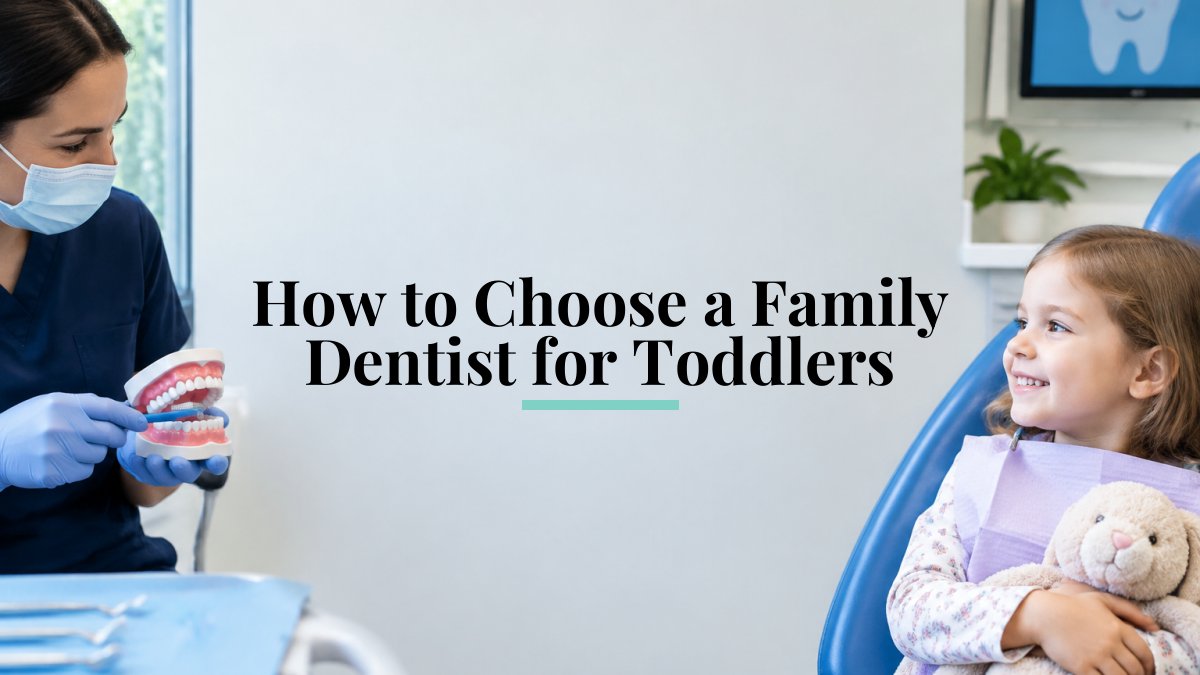
The first dental visit for toddlers is usually short and simple. A first visit is often a positive introduction rather than a full examination. Your child may sit on your lap while the dentist counts teeth and checks the mouth gently. Understanding what typically happens, and how to prepare, takes most of the uncertainty out of the day.
When to Book a Toddler's First Appointment
Australian guidance recommends a first dental visit when the first tooth appears, or by the child's first birthday, whichever comes first. If your toddler has not seen a dentist yet, booking now is sensible rather than waiting for a problem.
Timing within the day matters too. Book for a time when your toddler is usually alert and fed, not near a nap. Morning slots often work best.
What Typically Happens at a First Visit
A toddler-focused first visit is usually built around familiarisation rather than treatment. A common pattern is:
- A short conversation with you about your child's health, feeding, brushing and any concerns
- Your child sitting on your lap or beside you while the dentist looks in the mouth
- A gentle count of the teeth and a check of the gums, lips and tongue
- A brief demonstration of brushing, often with your child holding a toothbrush
Many practitioners keep the examination brief and stop if the child becomes distressed. A visit that ends on a positive note is more valuable than one that completes every check.
How to Prepare Your Toddler at Home
Preparation at home does more than anything said in the chair. Start a few days ahead with simple, playful steps.

Try these at home:
- Count your child's teeth together, then swap roles
- Read a picture book about a dental visit
- Practise opening wide and saying "ahh"
- Let your toddler hold a toothbrush and brush a doll's teeth
Keep your own manner calm. Children read faces well, so talk about the visit as a normal, happy outing. Avoid words like "hurt", "needle" or "scary", even in reassurance.
If Your Toddler Becomes Distressed
Distress is common and not a failure. A good practice expects it and has a plan. Ask in advance what happens if your child cries or refuses to cooperate.
If your child has sensory sensitivities or separation anxiety, mention this when booking so the practice can allow extra time and adapt the appointment. We have written a full step-by-step guide on how to prepare your child for their first dentist visit if you want more detail.
How to Prepare a Toddler for the Dentist at Home
Preparation at home does more than anything said in the chair. Start a few days ahead with simple, playful steps.
Try these at home:
- Count your child's teeth together, then swap roles
- Read a picture book about a dental visit
- Practise opening wide and saying "ahh"
- Let your toddler hold a toothbrush and brush a doll's teeth
We have written a full step-by-step guide on how to prepare your child for their first dentist visit if you want more detail.
Questions to Ask a Family Dentist Before You Book
Bring a short list to your first call or consultation. These questions cover the practical points most parents forget.
Use this checklist:
- Are you a preferred provider for my health fund?
- Do you bulk bill under the Child Dental Benefits Schedule?
- How long is a toddler's first appointment?
- Can my child stay with me during my own check-up?
Write the answers down. Comparing them across two or three practices makes the decision much easier.
Comfort, Communication and Handling Dental Anxiety in Young Children
Dental anxiety in young children is common and manageable. A good practitioner uses a calm voice, explains each step in simple words and gives the child a sense of control.
Parent involvement helps. Staying close, holding a hand and offering quiet reassurance keeps most toddlers settled.
We have separate advice on finding a gentle dentist for a nervous child if anxiety is your main concern.
Costs, Health Fund Cover and the Child Dental Benefits Schedule
Cost is where many families get caught out. Ask for a written estimate before treatment, and confirm what your fund covers.
The Child Dental Benefits Schedule is an Australian government programme that helps eligible children access basic dental care.
Health fund cover varies by policy. Our guide to family dental clinic health fund cover explains how this works in practice.
Booking Your Toddler's First Check-Up
Booking is the easy part once you have your answers.
Our practice is open on Saturdays. We are also a preferred provider for Medibank, Bupa and HCF, and we take a preventive approach to care.
You can read what to expect at your first visit before you come in, so your toddler knows the plan too.
Choosing a family dentist for toddlers is a decision you make once and benefit from for years.
Frequently Asked Questions
When should a toddler first visit the dentist?
Most Australian guidance recommends a first dental visit when the first tooth appears, or by the child's first birthday, whichever comes first. That first appointment is usually short and informal: a look at the teeth, a check on how brushing is going, and advice for parents. If your toddler is older and has never been, book a visit rather than waiting. Early check-ups let a family dentist for toddlers spot early childhood tooth decay while it is still simple to manage, and they help the child build familiarity with the practice before any treatment is needed.
Should I choose a family dentist or a specialist children's dentist?
Both can work well, and the right choice depends on your child. A family dentist for toddlers who regularly treats young children can handle routine check-ups, preventive care and most common issues, and the whole family can be seen at one practice. A paediatric dentist has extra specialist training and is often the better option for children with complex needs, significant dental anxiety, special needs or sensory needs. Ask how many toddlers the practice sees each week and whether they refer on when a case needs specialist care.
How can I prepare my toddler for their first dental visit?
Keep it low-key and positive. Talk about the visit a day or two beforehand using simple words, read a picture book about going to the dentist, and let your toddler practise opening their mouth wide at home. Avoid words like 'hurt' or 'needle' even in reassurance, because toddlers latch onto them. Book a time when your child is usually well rested, bring a comfort toy, and plan something calm afterwards. If you are unsure how to prepare a toddler for the dentist, ring the practice and ask what they recommend.
How often should toddlers see a dentist?
Most toddlers do well with a routine check-up every six to twelve months, but the right interval depends on their decay risk, diet, fluoride exposure and brushing habits. Your dentist will recommend a schedule and adjust it as your child grows. Between visits, brush twice daily with a small amount of age-appropriate fluoride toothpaste, avoid putting a toddler to bed with a bottle, and keep sugary snacks to mealtimes. If you notice white spots on the teeth or any pain, book sooner rather than waiting for the next scheduled check.